How to Price Roof Repairs: Leaks, Flashing, Missing Shingles
How to price roof repairs: a service call minimum, an inspection fee credited to the job, pipe boots, step flashing, shingles, a valley, fall protection.
The MakeHay team · · 11 min read
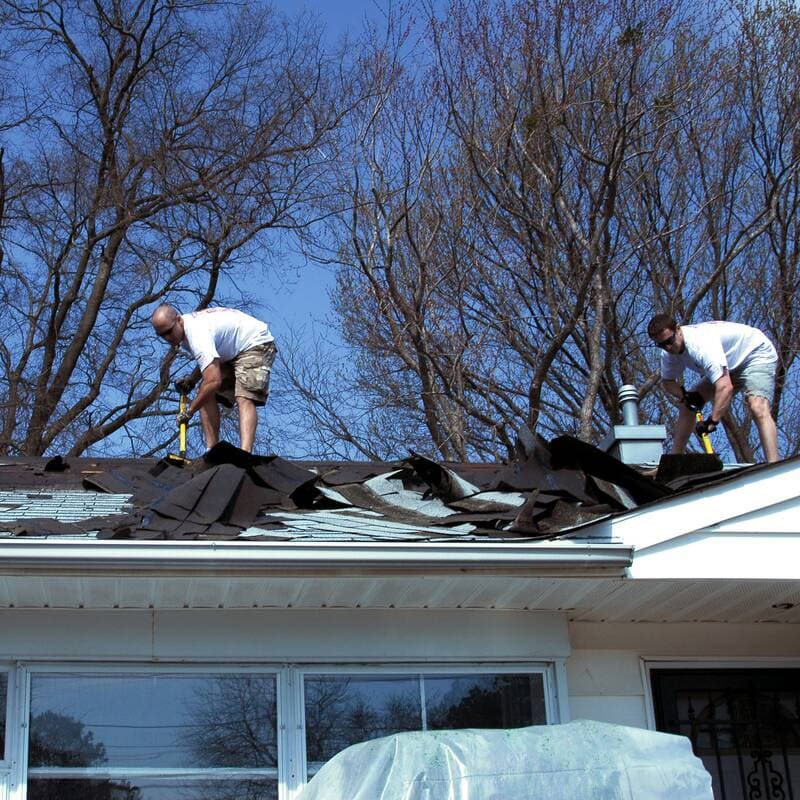
Here is how to price roof repairs so the small jobs pay. A repair is a truck, two people, a ladder, fall protection and an hour of looking before anyone touches a shingle. So the price starts with a service call minimum, credits the inspection to the repair, and adds parts and hours for the leak itself: a pipe boot, step flashing, a few shingles or a valley.
Start with the minimum service call
Every repair carries the same fixed cost before the first nail: the drive, the ladder, the harness and anchor, the walk of the roof and the attic. Set a minimum that covers two people for the first hour and quote it as one line called a service call.
Bob Vila's consumer guide, updated June 9, 2023, says most roofing companies charge $45 to $75 an hour for leak repairs and that emergency calls run at least $100 to $300 more than usual. Those are homeowner figures; the minimum has to clear your own truck and crew.
Finding the leak: an inspection fee credited to the repair
The leak is rarely under the stain. Ask the Builder's list of common leak locations warns that "A leak may actually be eight to 10 feet sideways from where you see the wet ceiling or spot in the attic." Finding it is work: price it as an inspection fee, credited when the customer books the repair.
- Step 1: This Old House says that "If you have an accessible attic, that's the place to start to look for the leak."
- Step 2: Check the usual suspects: vent boots, step flashing, chimney flashing, valleys, storm collars, old satellite dish holes.
- Step 3: If nothing shows, run the hose test: Family Handyman's guide says to let the hose run for several minutes in one area before moving it up the roof a little farther, and that the process can take over an hour.
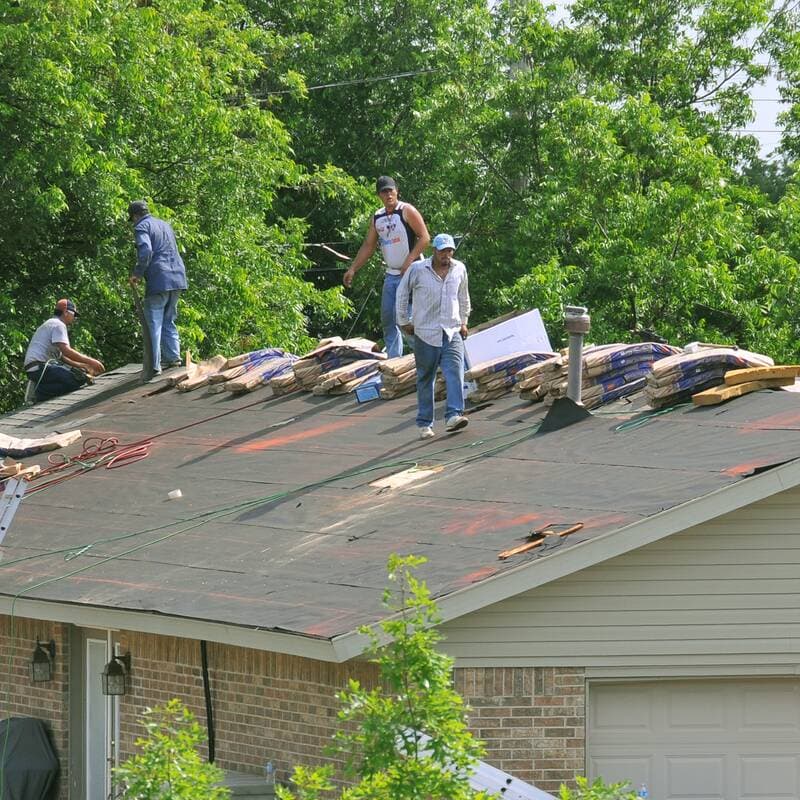
Bob Vila's guide puts a roof inspection at $125 to $325 in the homeowner market. Say on the quote that the fee is credited, and keep it on the invoice when the customer declines the work.
What the common roof repairs include
Pipe boot replacement
Ask the Builder tells you to look for "cracked rubber around the plumbing pipe." Break the seals around the pipe, pull the old boot, slide the new one under the upper courses and over the lower, nail and seal. Fine Homebuilding's 2018 guide to boot flashings priced a commodity rubber boot at $5 to $10 and the better boots at $11 to $60, and argued for the better ones: roofs now last 30 to 50 years, so the boot should too. Fasteners Plus lists a round EPDM pipe boot, sold for metal roofs and described as fitting any roofing material or slope, at $14.99. Quote the better boot as the default.
Step flashing repair
Family Handyman warns that "If the flashing rusts through, or a piece comes loose, water will run right behind it, and go into the house," and that "Rarely will caulk or roof cement permanently cure a leaky roof on their own." The fix is new metal, which means lifting siding and shingles along the run; the Residential Code 2024 on UpCodes (section R905.2.8.3, as adopted in Texas) calls for step or continuous flashing not less than 4 inches high and 4 inches wide. Price it by the linear foot of wall.
A few missing or torn shingles
IKO's guide to replacing missing shingles, dated October 25, 2023: break the seal with a flat pry bar, break the seals above, pull the nails in both courses, remove the old shingle, nail in a new one of the same size, then reseal with three small dabs of asphalt plastic roof cement, best done in cool weather. It adds that "IKO recommends that only properly trained professional roofing contractors engage in the shingling or repairing of roofs." Price a bundle, not a shingle, plus the matching described below.
A valley
A valley repair is a strip, not a spot: shingles come off both sides, the lining goes in, the shingles go back. The Illinois Building Code 2021 on UpCodes (section 1507.2.8.2) requires an open metal valley lining not less than 24 inches wide and a closed valley to carry one ply of smooth roll roofing not less than 36 inches wide or a self-adhering underlayment. Price it by the linear foot of valley with the shingles on both sides counted.
| Repair | Parts | Hours go to | Survey band |
|---|---|---|---|
| Pipe boot | One boot, nails, cement | Breaking seals, resealing | Vents: $75 to $250 |
| Step flashing | Flashing by the foot, shingles along the run | Siding off and on | Chimney flashing: $200 to $500 |
| A few shingles | One bundle | Matching, seals, resealing | Shingles: $150 to $800 |
| Valley | Lining, underlayment, shingles both sides | Strip and relay | Valley: $350 to $1,000 |
Matching shingles on a repair
A repair that leaks less but shows more is a callback. InterNACHI's inspection course on asphalt shingles says that "spot repairs to asphalt shingle roofs can be difficult to make without the repair being obvious to the eye," that "Shingles used on a roof should be of the same lot number, or the colors may not blend well," and that "as the granules weather away, the roof color will appear to change slightly." The manufacturers' association adds that "Color shading typically varies with the time of day, light intensity, and viewing angle."
So the matching is a priced step. Take a shingle off the roof from behind a vent, read the product and lot from a leftover bundle if one is in the garage, and order by that. When the color is gone, the choices are the closest current blend, shingles from a hidden slope moved to the visible one, or the reroof conversation below. Write on the quote that a repair will not match a weathered roof exactly, and have the customer approve that sentence.
Labor, fall protection and the weather
The Bureau of Labor Statistics' Occupational Outlook Handbook puts the median wage for roofers at $26.65 an hour in May 2025. That is wages, not your rate: add payroll taxes, insurance, the truck and the overhead for the loaded hour. The handbook also notes that roofers usually do not work during inclement weather, so a repair quote names a weather day rather than a date.
Under the US OSHA construction rule, 29 CFR 1926.501(b)(13), each employee engaged in residential construction activities 6 feet or more above lower levels must be protected by a guardrail system, a safety net system or a personal fall arrest system; paragraph (b)(11) says the same for a steep roof. The rigging time belongs in the minimum.
Good to know: This is general information, not legal advice. Codes change and vary by town; read the current text and ask your building department before you rely on it.
Worked example: A pipe boot and six shingles on a one-story 6/12 roof
- Inspection: 1 hour in the attic and on the roof finds a split boot and six wind-torn shingles; the fee is credited because the customer books the repair.
- Parts: one EPDM pipe boot at $14.99 (Fasteners Plus listing) + one bundle of IKO Cambridge shingles at $48.04 (Superarbor listing) = $63.03, plus your roof cement.
- Hours: 2 roofers × 2.5 hours on site, rigging and inspection included (your own timing) = 5 crew hours; at the BLS median, 5 × $26.65 = $133.25 of wages, times your own burden and overhead factor.
- Underneath the price: $63.03 + $133.25 = about $196 before burden, overhead and margin; Bob Vila's homeowner guide, updated June 9, 2023, puts a leaking roof at $360 to $1,550.
Result: About $196 of parts and median wages underneath, before burden, overhead and margin, against a homeowner band of $360 to $1,550; the service call minimum and the matching sentence make the small job pay.
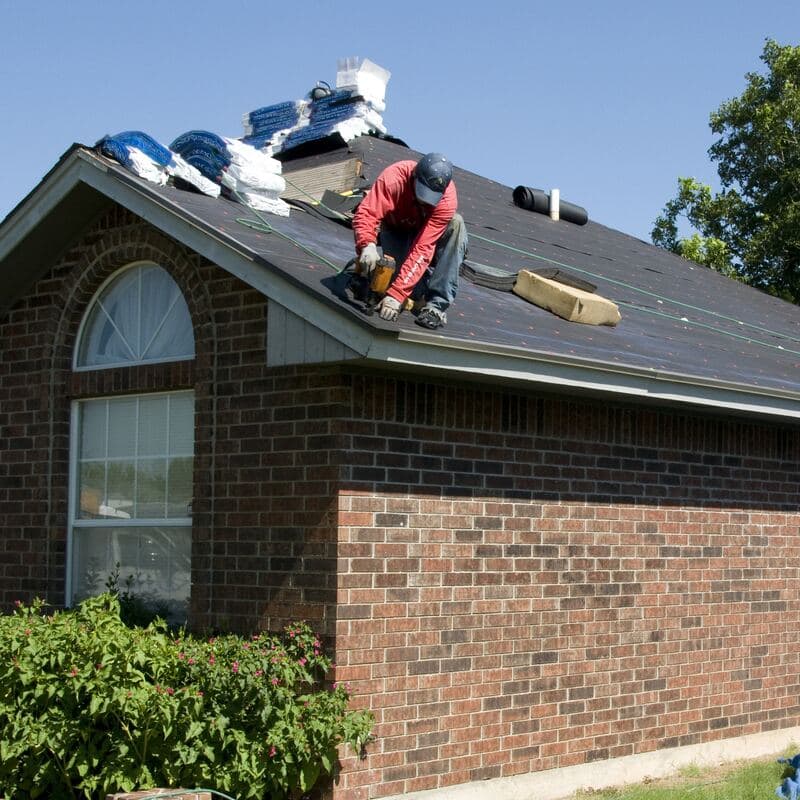
Roof repair cost in a homeowner guide
Bob Vila's consumer guide, updated June 9, 2023, puts the typical repair at $379 to $1,758 with an average of $1,060, a leaking roof at $360 to $1,550, chimney flashing at $200 to $500 and a patch at $200 to $1,000. The bands are wide because they mix a boot with a valley; a quote that names the repair is narrow.
Tarps for emergency work
After a storm the first job is a cover, not a fix. A FEMA release from September 23, 2017 describes Operation Blue Roof as "a temporary covering of blue plastic sheeting" installed to "help reduce further damage to property until permanent repairs can be made." Price your own tarp job the same way, as its own line, with the repair quoted once the roof is dry. WebstaurantStore lists a 20 ft by 30 ft 10 mil poly tarp at $94.49; add furring strips, nails, the hours on a wet roof and the emergency premium on top of the minimum.
When to repair or replace a roof
The manufacturers' association says "Sooner or later, every roof needs to be replaced, usually due to the long-term effects of weathering," and that a residential roof over 20 years old is a prime candidate for reroofing. A third leak call in a year, shingles that crack when the seal is broken, or a color no supplier stocks are the signals to stop patching. Quote the repair and put a second number beside it for the slope or the roof; pricing a roof replacement per square walks through that number; a roof cleaning is the upsell when the roof is sound but streaked.
Writing the repair quote and the invoice
A repair quote has four lines: the service call, the inspection fee with its credit, the repair with its parts, and the matching sentence. In MakeHay the lines go in as flat or per item prices, the credit as a discount, and the customer approves and signs online from a link, which is how the matching sentence gets a signature. The approved quote becomes an invoice in one click, paid by card or ACH online or recorded as a check or cash. A leak photo arrives through the request form with the address, enough to send the service call price before the truck moves.
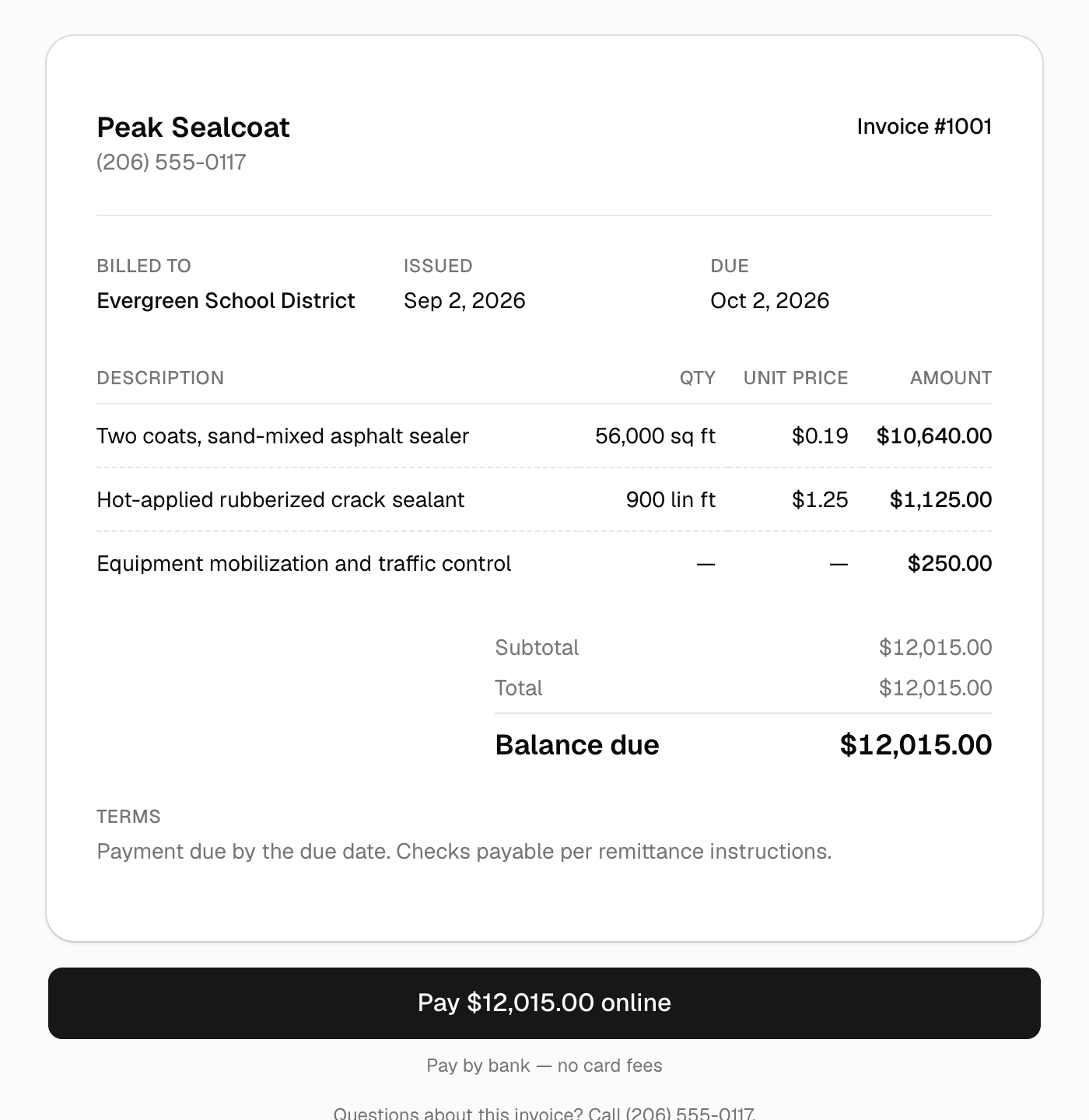
The invoice the customer sees, with the repair's lines and an online pay button.
FAQ
How much does roof leak repair cost in a homeowner guide?
Bob Vila's guide, updated June 9, 2023, puts a leaking roof at $360 to $1,550 and the average repair at $1,060 inside a typical range of $379 to $1,758. Those are homeowner bands across every kind of repair; a quote that names the boot or the flashing is narrower.
Should the inspection fee be credited to the repair?
Yes, when the customer books the repair, and kept when they do not. The hour in the attic and on the roof is real work; Bob Vila's guide puts a roof inspection at $125 to $325. Say the credit on the quote so the fee reads as a down payment on the fix.
Can a repair match the existing shingles?
Not exactly on a weathered roof. InterNACHI's inspection course says spot repairs can be hard to make without being obvious, and that shingles should be from the same lot number or the colors may not blend. Order by product and lot from a shingle off the roof, and have the customer approve a sentence saying the patch will show a little.
Sources
- Bureau of Labor Statistics, Occupational Outlook Handbook: Roofers · Median pay $26.65 per hour and $55,440 per year, May 2025; "Roofers work outdoors in extreme temperatures, but they usually do not work during inclement weather"; the lowest 10 percent earned less than $37,460 and the highest 10 percent more than $81,720. (accessed October 18, 2026)
- OSHA: 29 CFR 1926.501, Duty to have fall protection · Paragraph (b)(13): "Each employee engaged in residential construction activities 6 feet (1.8 m) or more above lower levels shall be protected by guardrail systems, safety net system, or personal fall arrest system" unless another paragraph provides an alternative; (b)(11): each employee on a steep roof with unprotected sides and edges 6 feet or more above lower levels shall be protected by guardrail systems with toeboards, safety net systems or personal fall arrest systems. (accessed October 18, 2026)
- Ask the Builder: Roof Leak, Ten Most Common Leak Locations · Lists the field of shingles, valleys, head wall flashings, wall step flashing, chimneys, plumbing vent flashings, furnace or B-vent flashing, ice dam leaks, wind blown rain leaks and non-roof leaks; "A leak may actually be eight to 10 feet sideways from where you see the wet ceiling or spot in the attic"; "Valleys can be big problems if you do not trim the shingles correctly"; look for "cracked rubber around the plumbing pipe"; "If they become loose, the storm collars can cause leaks"; some leaks need "detective work and possibly a garden hose and an inside spotter." (accessed October 18, 2026)
- Family Handyman: Roof Repair, How to Find and Fix Roof Leaks · Hose test: run the hose for several minutes in one area before moving it up the roof a little farther, with a helper inside; the process "can take over an hour"; step flashing: "If the flashing rusts through, or a piece comes loose, water will run right behind it, and go into the house"; "Rarely will caulk or roof cement permanently cure a leaky roof on their own"; vent boots may be rotted or torn; holes left from a satellite dish or antenna brackets cause damage for years; updated September 7, 2024. (accessed October 18, 2026)
- This Old House: How to Fix a Roof Leak · "If you have an accessible attic, that's the place to start to look for the leak"; "The flashing for plumbing vent pipes is often a source of leaks"; "Check the flashing around vent pipes, dormers, and roof-pitch transition points"; reproduce the leak by soaking spots with a garden hose while someone inside watches; updated May 26, 2026. (accessed October 18, 2026)
- IKO: How to Replace Missing Shingles · Seven steps: break the seal on the target shingle with a flat pry bar, break the adjacent seals, remove the nails, remove the adjacent nails in the course above, remove the old shingle, install a new shingle of the same size and re-nail the overlying shingles, reseal with three small dabs of asphalt plastic roof cement; breaking the seal is best done in cool weather; "IKO recommends that only properly trained professional roofing contractors engage in the shingling or repairing of roofs"; dated October 25, 2023. (accessed October 18, 2026)
- UpCodes: Sidewall Flashing, Residential Code 2024 as adopted by the Texas Windstorm Insurance Association, Section R905.2.8.3 · "Base flashing against a vertical sidewall shall be continuous or step flashing"; flashing "not less than 4 inches (102 mm) in height and 4 inches (102 mm) in width" that "shall direct water away from the vertical sidewall onto the roof or into the gutter"; where siding is provided "the vertical leg of the flashing shall be continuous under the siding." (accessed October 18, 2026)
- UpCodes: Valleys, Illinois Building Code 2021, Section 1507.2.8.2 · For open valleys with a metal lining, "the valley lining shall be not less than 24 inches (610 mm) wide"; open valleys lined with two plies of mineral surfaced roll roofing, the bottom ply 18 inches wide and the top ply "not less than 36 inches (914 mm) wide"; closed valleys lined with one ply of smooth roll roofing "not less than 36 inches (914 mm) wide" or a self-adhering polymer modified bitumen underlayment; the page also lists the section under the 2018 and 2024 editions. (accessed October 18, 2026)
- Asphalt Roofing Manufacturers Association: Frequently Asked Questions · Glossary: a valley is "The internal angle formed by the intersection of two sloping roof planes"; flashing is "Pieces of metal or roll roofing used to prevent seepage of water into a building around any intersection or projection"; "Sooner or later, every roof needs to be replaced, usually due to the long-term effects of weathering"; a residential roof over 20 years old "is a prime candidate for reroofing." (accessed October 18, 2026)
- Asphalt Roofing Manufacturers Association: Variations in Color Appearance on Newly Installed Asphalt Shingle Roofs · "Color shading is usually the result of variations in surface reflectance in different areas of the roof"; "Color shading typically varies with the time of day, light intensity, and viewing angle"; manufacturers often use surface granule blends to reduce the potential for color shading; posted April 8, 2024. (accessed October 18, 2026)
- InterNACHI: Mastering Roof Inspections, Asphalt Composition Shingles, Part 36 · "spot repairs to asphalt shingle roofs can be difficult to make without the repair being obvious to the eye"; "Shingles used on a roof should be of the same lot number, or the colors may not blend well"; "as the granules weather away, the roof color will appear to change slightly"; three to five granule colors on each shingle reduce visible shading; by Kenton Shepard and Nick Gromicko. (accessed October 18, 2026)
- Fine Homebuilding: A Guide to Better Boot Flashings · A commodity rubber boot at $5 to $10; better boot flashings at $11 to $60 overall, with traditional lead flashing at $25 to $50, a galvanized two-piece boot at $20 to $30, a TPO plastic boot at $16 to $20, a one-piece TPE boot at $11 to $17 and a silicone boot at $55 to $57; roofs now last 30 to 50 years so the boot should be up for the duration; by Mike Guertin, Fine Homebuilding issue 276, July 2018. (accessed October 18, 2026)
- Fasteners Plus: #3 Roofjack Round EPDM Pipe Flashing Boot, Black · $14.99 for a round EPDM pipe flashing boot by Aztec Washer, listed for metal roofs and described as giving "long-lasting protection against leaks, no matter the roofing material or slope", fitting pipe from 1/4 inch to 5 inches, base 7 and 3/4 inches wide, 3 and 3/4 inches high; the price shown on October 18, 2026. (accessed October 18, 2026)
- Superarbor: IKO Cambridge Shingles, Dual Black (Bundle) · $48.04 USD per bundle, unit of measure Bundle (BDL), item weight 72.15 lb; the price shown on October 18, 2026. (accessed October 18, 2026)
- WebstaurantStore: Core Tarps 20 by 30 Blue Heavy-Duty Weatherproof 10 Mil Poly Tarp with Reinforced Edges · $94.49 for a 20 ft by 30 ft 10 mil poly tarp with "metal grommets every 24”", described as a protective cover for items such as building materials, vehicles, roofs and outdoor furniture; the price shown on October 18, 2026. (accessed October 18, 2026)
- FEMA: Twelve Additional Florida Counties Eligible for Operation Blue Roof · Operation Blue Roof provides "a temporary covering of blue plastic sheeting" at no cost to eligible homeowners to "help reduce further damage to property until permanent repairs can be made"; only primary residences with standard shingled roofs qualify; metal roofs and mobile homes are repaired as practical case by case; roofs with more than 50 percent structural damage are not eligible; installed after a Right of Entry form is signed; news release dated September 23, 2017. (accessed October 18, 2026)
- Bob Vila: How Much Does Roof Repair Cost? · Consumer guide: "Roof repair costs run from $379 to $1,758, or an average of $1,060"; "It typically costs $75 to $250 to repair roof vents"; "Repairing chimney flashing costs $200 to $500 on average"; many shingles needing repair $150 to $800; a roof valley $350 to $1,000; "In general, roof leak repair costs $360 to $1,550"; "The average cost to patch a roof is $200 to $1,000"; "Most roofing companies charge between $45 and $75 per hour for roof leak repairs"; "A roof inspection costs from $125 to $325"; "Most emergency roof repairs cost at least $100 to $300 more than usual"; updated June 9, 2023. (accessed October 18, 2026)