How to Price Fall Leaf Cleanup: By the Hour or the Yard
How to price fall leaf cleanup by the hour, per visit or per cubic yard: what drives the time, equipment rates, city yard waste rules and a worked job.
The MakeHay team · · 11 min read
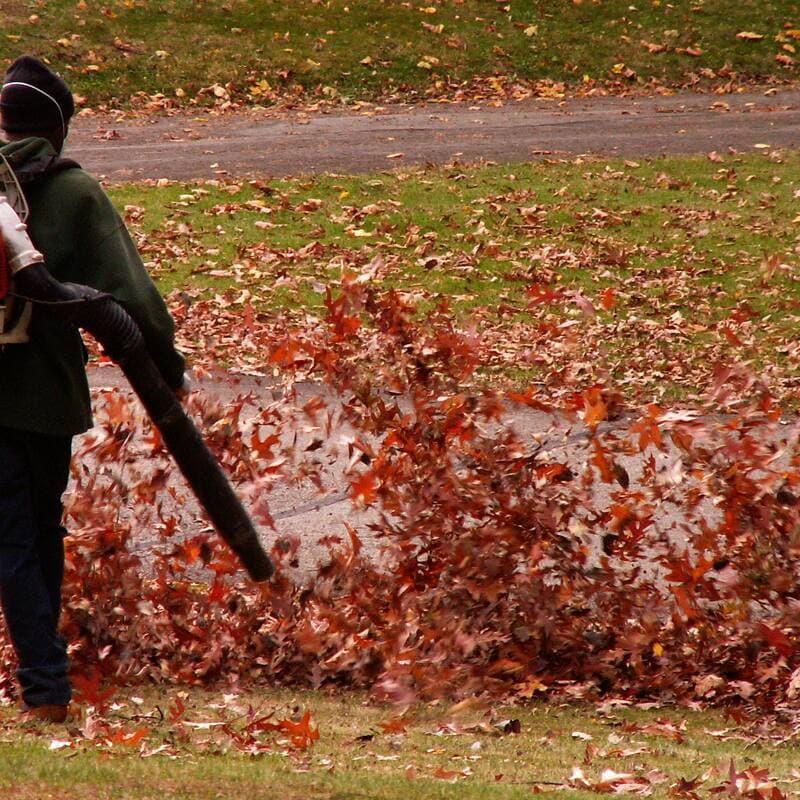
Here is how to price fall leaf cleanup so the number holds up on a wet Tuesday with twice the leaves you expected. Price the time, not the lawn: count what slows a crew down, decide where the leaves go before you quote, and sell a season of visits instead of one long afternoon.
Three ways to price leaf cleanup: hourly, per visit, per yard hauled
An hourly price is honest, and customers dislike it, because the quote and the invoice differ. A per visit price is the same hourly math with the hours decided before the crew arrives, so the risk sits on your estimate. A per cubic yard price charges for what leaves the property, and only works when both sides agree on what a yard is. What holds up on residential work is the per visit price on the quote, with the hourly rate written in as the overage rate for the storm that drops everything in one night.
Leaf removal cost per hour: start from the wage
The US Bureau of Labor Statistics' Occupational Outlook Handbook says "The median hourly wage for grounds maintenance workers was $19.27 in May 2025," and lists landscaping and groundskeeping workers at $18.82. That is the wage, not the rate: payroll taxes, workers' compensation, insurance and the truck's hour sit on top of it before any profit does. Build the loaded rate per worker hour once, date the sheet, and price every leaf job as hours times that rate plus equipment and markup.
What drives the hours on a fall cleanup estimate
Walk the property with a list of what adds time; the lawn's square footage matters less than what is on it and around it.
- Tree count and species: count the trees on the lot and the ones overhanging it, and ask what they are; some drop over weeks and a few hold leaves into winter, which sets the number of visits.
- Beds and groundcover: leaves in a bed cannot be blown in a straight line, and ivy holds them like a net.
- Fences, corners and walls: the wind piles leaves where the blower cannot push through, so the crew blows along the fence, then carries.
- Hardscape: patios, pool decks, gravel and mulch need a lighter hand than a lawn.
- Distance to the truck: a backyard whose only gate is on the far side means every tarp load walks around the house.
- Wet leaves: the blower moves less per pass, the tarps weigh more, and the curb pile will not vacuum until it dries. Quote wet work by the hour or reschedule.
Time a few properties from truck door to truck door with the count of trees, beds and fence feet beside each; after a dozen jobs that table prices the next one.

Blower, tarp or vacuum truck: the equipment behind the rate
Leaf blower vs leaf vacuum: what each costs to run
A backpack blower is the baseline. A dealer lists the Husqvarna 350BT at $429.99 with 692 CFM of air flow and wind speeds of up to 180 MPH; the listing showed it sold out on October 18, 2026, so price from your own dealer's invoice. CFM, the volume of air moved, is what moves leaves; MPH is what lifts a wet one off the pavement.
The tarp is the cheapest tool and the one that sets the pace, because every tarp load is a walk to the curb. Covers and All lists a super heavy duty 10 by 12 foot poly tarp at $34.90, 20 mil thick with grommets 18 inches apart.
A truck-mounted debris loader changes the math on large lots. Billy Goat's debris loader page says the line features "armor plate steel impellers with a 12:1 reduction ratio," and rates the DL1302H at 2,100 CFM. A dealer lists the DL1302H at $3,686.99, shown sold out on October 18, 2026. It turns a curb pile into a packed bed in minutes, but it is a payment and a second person on the hose, so it earns its keep on routes, not on a single yard. Equipment goes in the rate as purchase price divided by the season's jobs, plus fuel and parts.
Leaf cleanup price per cubic yard: say which yard you mean
A cubic yard is 27 cubic feet, and Budget Dumpster's guide says "A standard full-size pickup truck can hold about 2 to 3 cubic yards, depending on material." To measure a load, multiply the bed's length by its width by the pile height in feet and divide by 27. Loose leaves are mostly air: the 12:1 reduction Billy Goat rates its loaders for means a bed of vacuumed leaves was many beds of raked ones.
So a per cubic yard price has to name the yard: loose on the tarp, bagged at the curb or packed in the truck. The cleanest version charges per bag or per packed bed, things the customer can count. A hardware store lists a 5 count of 30 gallon kraft paper lawn and leaf bags at $3.29, about 66 cents a bag. Add the dump's gate fee per yard from its own schedule, and the drive.
Should you bag or mulch leaves? What the extension research says
Mulching leaves into the lawn with the mower is the fastest cleanup there is. Virginia Tech's publication on lawn leaf management, reviewed August 2025, cites Michigan State research that "a depth of up to 6 inches of leaves can be successfully mulched at a time," says "Multiple passes with your mower might be required to thoroughly chop leaves," and cites Purdue research on maple leaves finding that "Mulching the leaves had no undesirable effects on turf quality or color."
Bagging still has its place. The same publication says "In some situations, leaf removal by way of blowing, raking, or vacuuming is essential because of turf use," and that leaf mulch "did not prove to be a substitute for appropriate N fertilization practices." So: mulch the lawn when the layer chops in a pass or two, blow and bag the beds and the drifts, and say which is which on the quote, because some customers read mulching as skipped work. Offer both as packages: mulch-in-place with the beds blown out, or full removal.
Haul-away and the city's yard waste rules
Before you promise to leave the leaves at the curb, read the town's page. Tampa, Florida, has refused yard waste in plastic bags since February 1, 2024, compostable plastic included; it takes reusable containers of 32 gallons or less, paper bags made for yard waste, or bundles tied with natural fiber, with materials "less than 4 feet in length, less than 40 lbs. and 16" or less in diameter."
Roanoke Rapids, North Carolina, collects loose leaves November through February, wants piles "placed behind the curb or edge of pavement without blocking the sidewalk or street," says that raking or blowing leaves into the street violates city code, asks that limbs stay out of the piles because they damage the vacuum equipment, and cannot collect when it rains. Write the disposal method on the quote as its own line: curb pile, paper bags, or hauled at your per load price. The Virginia Tech publication notes that "In some areas, it is actually illegal to place bagged leaves at curbside for pickup."
Worked example: A two-worker, three-hour cleanup with 20 bags at the curb
- Wages: 2 workers × 3 hours × $19.27 (the May 2025 median hourly wage for grounds maintenance workers) = $115.62.
- Burden: payroll taxes, workers' compensation and insurance; at 30 percent (your own figure) that is $115.62 × 1.30 = $150.31.
- Bags: 20 bags of 30 gallon paper at $3.29 per 5 count = 4 packs × $3.29 = $13.16.
- Equipment: the $429.99 blower and the $34.90 tarp recovered over 40 cleanups this season (your own count) = $464.89 ÷ 40 = $11.62 per job.
- Cost on site: $150.31 + $13.16 + $11.62 = $175.09.
- Price: cost ÷ (1 minus your overhead and profit share); at 35 percent (your own figure) that is $175.09 ÷ 0.65 = $269.37, quoted as $270.
- Hourly equivalent: $270 ÷ 6 worker hours = $45 per worker hour, the overage rate for the quote.
Result: About $270 per visit for 6 worker hours and 20 paper bags, which is $45 per worker hour; swap in your own burden, markup, bag count and timing.
One visit or a season of visits
The one-time cleanup is the most expensive visit on the calendar: the leaves are deepest, rained on, and the beds are full. A season of three or four lighter visits, timed to the trees on the lot, costs the crew less per visit and the customer more in total. Price the season as a set of visits with the last one as the heavy cleanup, and put a last-visit date in writing with a rule for the one after it, because a late-dropping oak does not read the calendar.
Bundle it with the last mow and the gutters
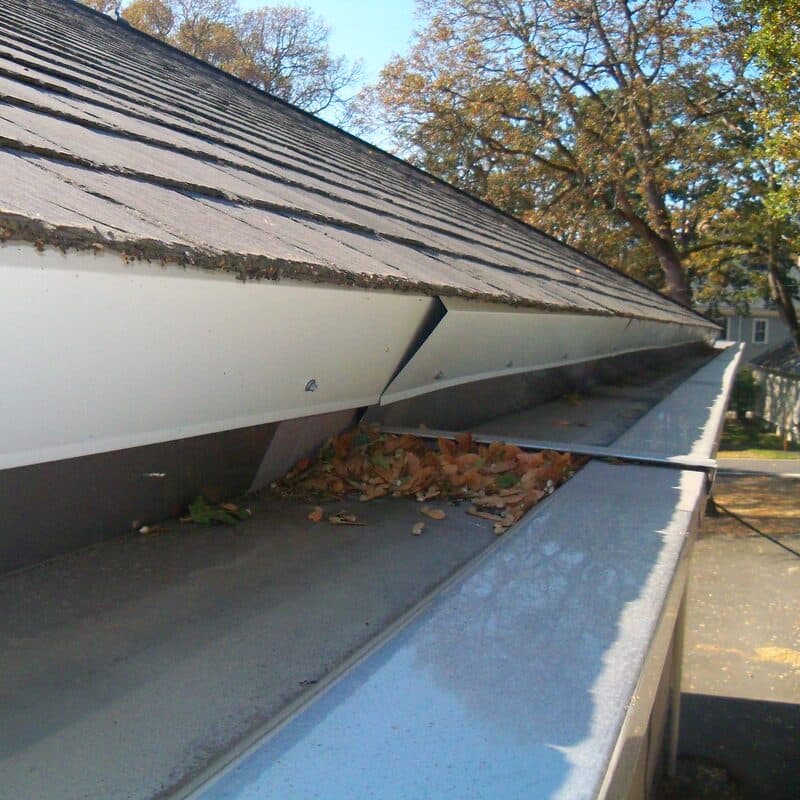
The crew is already there with the mower, so the last mow of the year and the cleanup are one visit, priced as one; pricing lawn mowing per cut covers that line. Gutters are the add-on the customer forgets until the first downspout overflows; pricing gutter cleaning per linear foot covers that one, and pricing junk removal by the load has the truck bed math for a hauled pile.
In MakeHay, a leaf cleanup is a quote with lines in your own units, per item or flat, and the mulch-in-place and full-removal options go out as good, better and best packages on one quote; the customer picks one and approves and signs online. A season of visits is recurring service on the calendar, and the last mow, the cleanup and the gutters are three lines on the same quote, which is free.
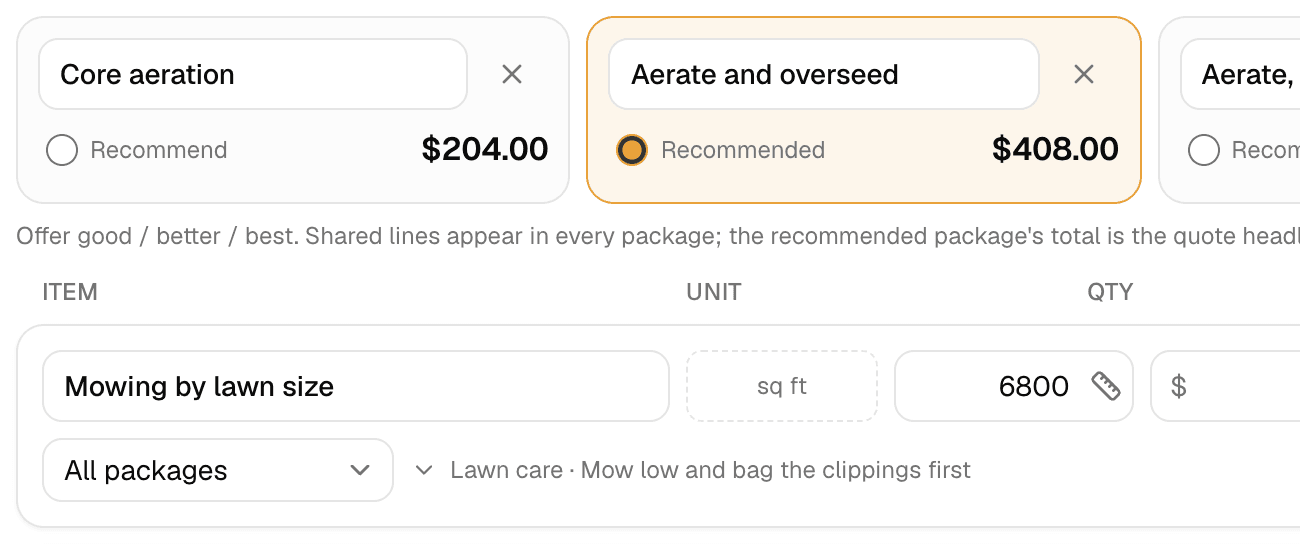
Packages on one quote: the customer sees the options side by side and picks the price.
Whatever the tool, the quote should name three things: the visits and their dates, what happens to the leaves, and the overage rate for the day the trees surprise the estimate. A price that names those three has nothing to argue about in December.
FAQ
How much is a cubic yard of leaves?
A cubic yard is 27 cubic feet, and a standard full-size pickup holds about 2 to 3 cubic yards. Loose leaves are mostly air; Billy Goat rates its debris loaders for a 12:1 reduction, so a packed truck yard and a raked tarp yard are very different amounts. Charge per bag or per packed bed.
Can you mulch leaves instead of removing them?
Usually, for the lawn. Virginia Tech's publication cites Michigan State research that up to 6 inches of leaves can be mulched at a time, with multiple passes, and Purdue research that mulched maple leaves had no undesirable effects on turf quality or color. Beds, hardscape, deep drifts and turf in use still need blowing and bagging.
Can leaves go to the curb in plastic bags?
In many places, no. Tampa, Florida, has refused yard waste in plastic bags since February 1, 2024, and takes paper bags made for yard waste, reusable containers of 32 gallons or less, or bundles tied with natural fiber, each under 4 feet and 40 pounds. Read the town's page before you quote the disposal line.
Sources
- US Bureau of Labor Statistics, Occupational Outlook Handbook: Grounds Maintenance Workers · States that "The median hourly wage for grounds maintenance workers was $19.27 in May 2025"; lists landscaping and groundskeeping workers at a median hourly wage of $18.82 in May 2025; employment is projected to grow 5 percent from 2025 to 2035. (accessed October 18, 2026)
- Virginia Cooperative Extension, publication 430 521: "Leave" Them Alone: Lawn Leaf Management · Cites Michigan State research that "a depth of up to 6 inches of leaves can be successfully mulched at a time," varying with the mower; "Multiple passes with your mower might be required to thoroughly chop leaves"; Purdue research on maple leaves found "Mulching the leaves had no undesirable effects on turf quality or color"; Michigan State research found an overall reduction in dandelions and crabgrass over time; "the leaves did not prove to be a substitute for appropriate N fertilization practices"; "In some situations, leaf removal by way of blowing, raking, or vacuuming is essential because of turf use"; "In some areas, it is actually illegal to place bagged leaves at curbside for pickup"; first published July 2020, last reviewed August 2025. (accessed October 18, 2026)
- City of Tampa: Yard Waste FAQs · States that "As of February 1, 2024, yard waste in plastic bags will NOT be collected"; "Compostable or biodegradable plastic bags may not be used for yard waste"; residents must use max 32 gallon reusable containers, biodegradable paper bags or bundles with natural fiber jute twine; "The only accepted paper bags are those specifically made for yard waste collection"; materials "should be less than 4 feet in length, less than 40 lbs. and 16" or less in diameter"; yard waste in cardboard boxes, wheelbarrows or recycling carts will not be picked up. (accessed October 18, 2026)
- City of Roanoke Rapids, North Carolina: Leaf Collection · States that the Property Maintenance Department collects loose leaves from November through February; "Loose leaf piles should be placed behind the curb or edge of pavement without blocking the sidewalk or street"; "Do not rake or blow leaves into the street as this violates city code ordinance"; asks residents to separate tree limbs and shrubs from loose leaf piles because those items can damage the vacuum equipment; the city cannot collect loose leaves when it rains; leaves in alleys are collected once at the end of the season. (accessed October 18, 2026)
- Billy Goat: Debris Loaders · States that the debris loaders "feature armor plate steel impellers with a 12:1 reduction ratio," ranging from 13 to 37 HP; the DL13 (DL1302H) is rated at 2,100 CFM, the DL37 (DL3702VE) at 5,050 CFM and the DL3701VETR Leaf Dragon at 6,900 CFM. (accessed October 18, 2026)
- Russo Power Equipment: Billy Goat DL1302H Debris Loader · Lists the Billy Goat DL1302H debris loader at $3,686.99, 2,100 cfm of commercial suction, debris reduced up to 12:1; shown as sold out on October 18, 2026. (accessed October 18, 2026)
- Oakboro Tractor: Husqvarna 350BT Backpack Leaf Blower · Lists the Husqvarna 350BT backpack leaf blower at $429.99 with 692 CFM air flow and "wind speeds of up to 180 MPH"; shown as sold out on October 18, 2026. (accessed October 18, 2026)
- Hemlock Hardware: Do it Best 30 Gal. Natural Kraft Paper Yard Waste Lawn & Leaf Bag (5-Count) · Lists a 5 count of 30 gallon natural kraft paper lawn and leaf bags, 16 inches wide with a 12 inch gusset, at $3.29 on October 18, 2026, about 66 cents a bag. (accessed October 18, 2026)
- Covers and All: Super Heavy Duty Poly Tarps, Size 10' x 12' · Lists a 10 by 12 foot super heavy duty poly tarp, 20 mil thick with grommets 18 inches apart, at $34.90 (shown as $49.86 with 30 percent off) on October 18, 2026. (accessed October 18, 2026)
- Budget Dumpster: How Much Is a Cubic Yard? · States that "There are 27 cubic feet in 1 cubic yard"; "A standard full-size pickup truck can hold about 2 to 3 cubic yards, depending on material"; cubic yards = (square feet × depth in feet) ÷ 27. (accessed October 18, 2026)