How to Price Irrigation Spring Startup and Repairs
How to price irrigation spring startup: a base fee plus a per zone price from your minutes, plus repairs per head and valve at the maker's own prices.
The MakeHay team · · 11 min read
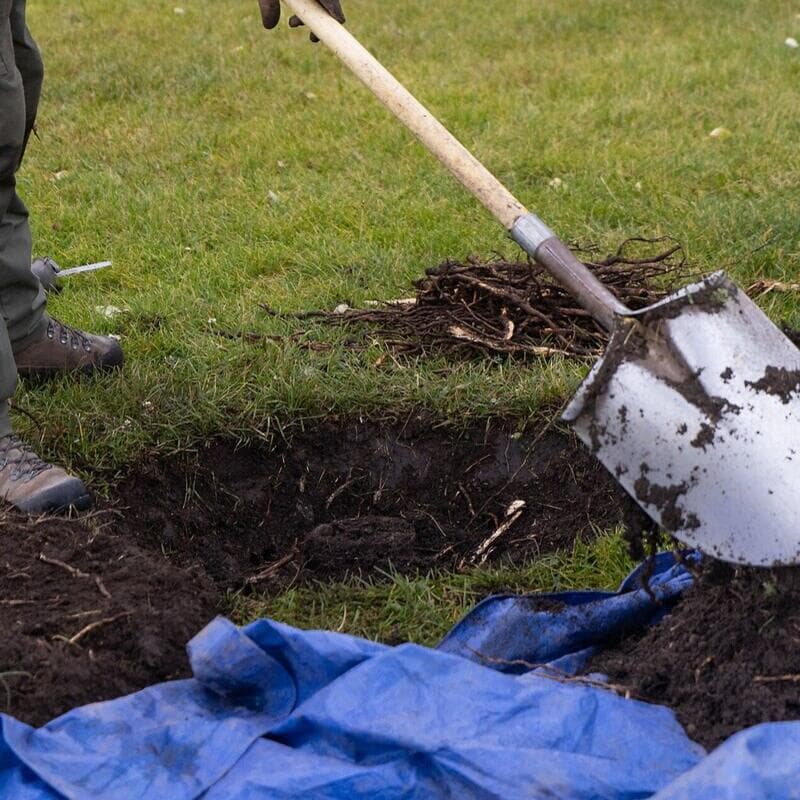
A spring startup has a fixed part and a per-zone part, so price it that way: a base fee for the drive, the slow pressurize and the controller, plus a per-zone price built from the minutes a zone takes to run and walk. Repairs are a separate price list, per head and per valve, from the manufacturer's own store prices with your minutes on top. Rain Bird's spring guide (March 23, 2026) sets the order: frost check 12 inches down, backflow, heads, main valve opened slowly, each station run, pressure read, reprogram.
What a sprinkler spring startup includes, step by step
Write the startup as a checklist on the quote, because the customer is paying for a sequence, not a visit. Rain Bird's homeowner guide, dated March 23, 2026, gives eight steps; a contractor's version is the same list done faster and recorded.
- Step 1: Confirm the ground is "completely frost-free at least 12 inches deep"; frozen ground can mean burst pipes.
- Step 2: Look the backflow preventer and valves over: "Check for visible cracks or damage from the winter freeze," drain plug tight, valves closed.
- Step 3: Clear dirt, grass and rocks from sprays and rotors, trim around each head, and note cracked parts for the repair list.
- Step 4: Set the controller's date and time and switch it to manual.
- Step 5: "Open the valve slowly and gradually to pressurize the system"; a fast turn causes water hammer, which can damage pipes and valves.
- Step 6: "Activate each station manually" and watch for heads that do not rise, poor coverage, leaks and misting.
- Step 7: Read the pressure; the guide puts most automatic systems between 45 and 75 psi.
- Step 8: Reprogram the schedule for the season and the local rules.
That list sets the price structure: the frost check, the backflow look, the controller and the slow pressurize happen once per property, whatever the zone count, and the station run happens once per zone.
Sprinkler startup cost per zone: a base fee plus a per-zone price
Time three startups from truck door to truck door and split the clock in two. The fixed part is everything before the first zone runs and after the last one stops: park, find the shutoff, open it slowly, check the backflow, set the controller, read the pressure, reprogram, write the ticket. The per-zone part is the run and the walk: start the station, watch every head, flag the repairs, start the next.
Put a wage on those minutes from public data. O*NET's wage page for landscaping and groundskeeping workers, built on Bureau of Labor Statistics 2025 data, shows a national median of $18.82 an hour, $22.52 at the 75th percentile and $27.28 at the 90th. A tech who can read a valve box sits above the median, so use the 75th or 90th figure, then add payroll taxes, insurance and the truck as your own multiplier.
The price has the same two parts: a base fee covering the drive and the fixed minutes at your loaded rate plus margin, and a per-zone price covering the zone minutes the same way. The quote reads as one line for the startup and one for the zones with the count visible, so a four-zone customer and a fourteen-zone customer each see why the number differs.
Irrigation repair pricing per head and per valve
Repairs are what the startup finds, so quote them as a price list the customer sees before the visit, each item as the part at your marked-up cost plus a fixed number of minutes. The parts have published prices. On Rain Bird's own store on October 18, 2026, a 4 inch 1800 series spray body with no nozzle is $2.99, the same body with a variable arc nozzle installed is $7.99, a 4 inch 5000 series full-circle rotor is $29.49, and a 1 inch DV series inline valve is $27.99.
| Part | Store price | The swap |
|---|---|---|
| 1804R 4 inch pop-up spray body, no nozzle | $2.99 | Unthread, replace, fit the nozzle, flush |
| 1804VAN 4 inch spray head with variable arc nozzle | $7.99 | Same swap, nozzle in; set the arc |
| 5004 4 inch rotor, full circle, with PRS and SAM | $29.49 | Dig to the swing joint, swap, set the radius |
| 100DV 1 inch inline valve | $27.99 | Open the box, cut or unthread, rewire the solenoid, test |
The labor side is minutes, and a head and a valve are not the same job. A spray head sits above the lateral and comes out in a few minutes once the sod is cut; a rotor sits on a swing joint and takes a hole; a valve means a valve box, two wire splices and a wait while the controller proves it opens and closes. Rain Bird rates the 100DV for 15 to 150 psi and 0.2 to 40 gpm, so it fits nearly every residential zone and is the one to stock. Time each of the three once.
Decide the rule for small repairs before the first visit: anything under a set amount is done on the spot and added to the invoice, anything over it is quoted and approved first. Printed on the quote, that rule lets the tech fix two heads without a phone call.
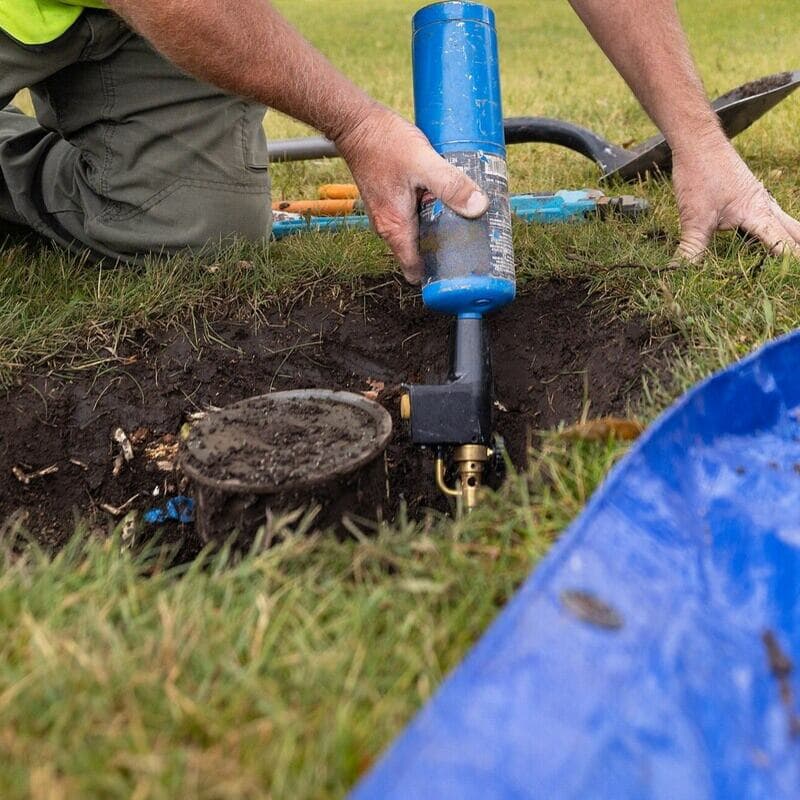
Backflow testing for irrigation systems and who pays for it
The backflow preventer is the one part of the startup a city may regulate, and the rule is the city's. Ankeny, Iowa's water page says "All underground irrigation systems are required to have their backflow prevention assembly tested by May 31 of every year," used that season or not, and only a certified technician can submit the report. Dallas says the opposite for lawn systems: "annual inspections are not mandatory," and "Testing is only required for newly installed, repaired or replaced irrigation backflow devices," by a tester registered with the city.
So the test is a separate line, and whether it belongs on the spring quote depends on the water utility for that address. If a tech on your crew holds the certification, price the test as its own item with the report filing included. If not, name the tester you bring in and pass the fee through. The startup still includes the look for cracks on Rain Bird's list; the certified test is the extra.
Good to know: This is general information, not legal advice. Backflow rules, deadlines and tester requirements are set by each water utility and change; read the current page for the address before you promise a customer anything.
The controller: setting it, and when to sell a better one
Reprogramming is the last step on Rain Bird's list, so say what you set: days, start times, minutes per zone, the rain delay. A clock-based controller runs the same schedule in a wet week, which is where the upsell lives. EPA's WaterSense page says "as much as 50 percent" of residential outdoor water "is wasted due to overwatering," and that replacing a clock-based controller with a labeled one can "save an average home up to 15,000 gallons of water annually."
Price the swap as the unit plus your minutes, and read the fine print before promising the WaterSense name. Rain Bird's store lists a 6 station ESP-TM2 at $166.49, and its spec table says the certification applies "With LNK2 WiFi and any Rain Bird rain sensor (sold separately)," so a labeled setup is three parts on the quote, not one.
Worked example: A six-zone startup with two spray heads replaced
- Fixed minutes (park, open the main slowly, backflow, controller, pressure, reprogram): 30 minutes, your own timing.
- Zone minutes: 6 zones × 5 minutes each, your own timing = 30 minutes.
- Two broken spray heads: 2 × $7.99 for the 1804VAN at Rain Bird's store = $15.98 in parts; 2 × 10 minutes to cut the sod, swap and flush = 20 minutes.
- Time on site: 30 + 30 + 20 = 80 minutes, plus the drive.
- Wages at the 75th percentile for landscaping and groundskeeping workers, $22.52 an hour: 80 ÷ 60 × $22.52 = $30.03, before payroll taxes, insurance and the truck.
- Cost floor: $30.03 + $15.98 = $46.01 before the drive and overhead.
- The quote: a base fee for the 30 fixed minutes and the drive, plus 6 × your per-zone price, plus 2 × your per-head price, every line set above its share of the floor.
Result: About 80 minutes on site with $30.03 in wages and $15.98 in parts underneath, quoted as three lines: the startup, six zones and two heads.
Spring startup and fall blowout as one recurring service
The fall blowout is the same property, the same zone count and the same customer, so the two visits belong on one agreement, each billed after it is done. Sprinkler blowout pricing and first freeze dates covers the fall side, base fee plus per zone, so one zone count prices both. Sell the pair as a second line the customer can approve now; a customer who approves both in April is an October stop without a phone call.
In MakeHay a startup quote carries line items in your own units, so the startup is a flat line, the zones are a per-item line with the count, and each repair is its own line from your price list (create and send a quote). The customer approves and signs from a link (get a quote approved and signed). The spring and fall visits go on the calendar as recurring service, with an invoice after each visit (create and send an invoice) and autopay for customers who want a card kept on file.
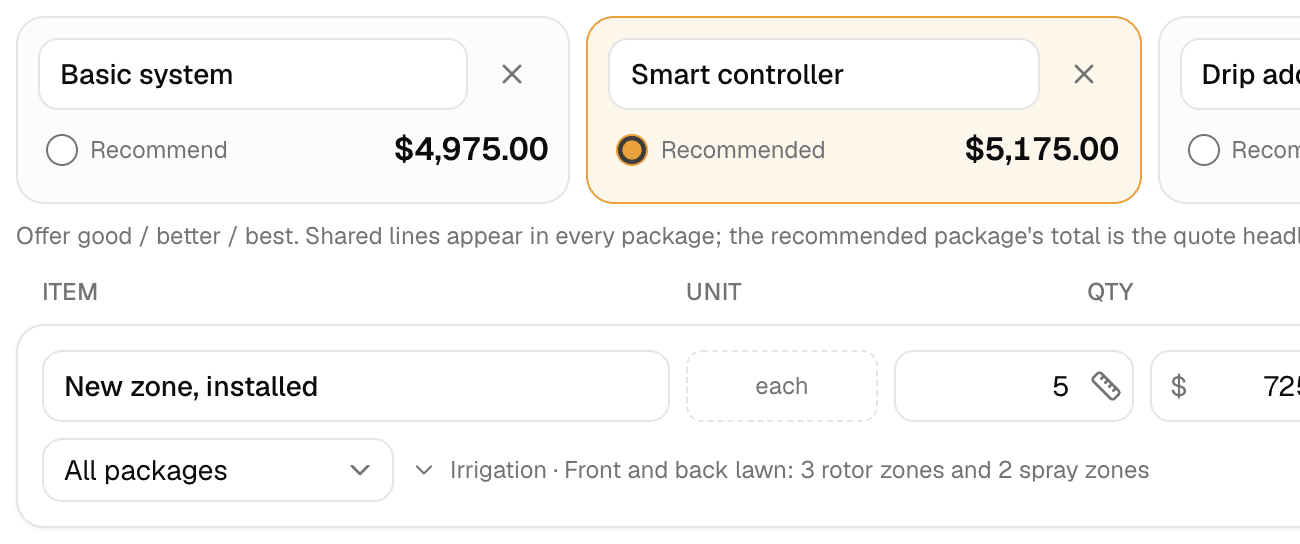
A startup quote as the customer sees it: the startup as one line, the zones with the count, and the repairs priced per item.
Writing the startup quote so it is approved from a phone
Keep the quote to four parts: the startup as one line with the checklist under it, the zones as a count times a price, the repair price list with the on-the-spot rule, and the fall blowout as an optional second line. The backflow test, where the city requires it, is its own line. Then send the same quote to every spring customer at once; the zone count is on the record from last year, and only the date window changes.
FAQ
How long does a sprinkler startup take?
Long enough for Rain Bird's eight steps, from the frost check to reprogramming. The fixed steps take about the same time on every property; the station run scales with the zone count, which is why the price is a base fee plus a per-zone amount.
Should the backflow test be part of the startup price?
Only where the water utility requires it and only by a certified tester. Ankeny, Iowa tests every irrigation assembly by May 31 each year; Dallas requires a test only after a device is installed, repaired or replaced. Check the utility's page for the address, then price the test as its own line.
What if a zone will not come on during the startup?
Treat it as a repair, not part of the startup. Confirm the main is open and the controller is calling the station, then open the valve by hand at the solenoid: water through the zone means the fault is electrical; no water means the valve or its supply. A solenoid or diaphragm is a per-valve line on your price list, and the on-the-spot rule decides whether the tech fixes it now or quotes it.
Sources
- Rain Bird: Is Your Sprinkler System Ready for Spring? Here's How to Get Started · Eight-step spring startup dated March 23, 2026: ground "completely frost-free at least 12 inches deep"; "Check for visible cracks or damage from the winter freeze" on the backflow preventer and valves; clear debris from heads; controller to manual; "Open the valve slowly and gradually to pressurize the system" to avoid water hammer; "Activate each station manually"; most systems operate best between 45 and 75 psi; reprogram. (accessed October 18, 2026)
- Rain Bird store: 1804R 4 in. 1800 Series Pop-up Spray Head, No Nozzle · Product page titled 1804R, SKU A44120, at $2.99, "No Nozzle Included," on Rain Bird's own online store, October 18, 2026. (accessed October 18, 2026)
- Rain Bird store: 1804VAN 4 in. Pop-up Spray Head with Variable Arc Nozzle · SKU A50882 at $7.99 with the adjustable pattern nozzle installed, spray up to 15 feet, on Rain Bird's own online store, October 18, 2026. (accessed October 18, 2026)
- Rain Bird store: 5004+FCSR 4 in. 5000 Series Full-Circle Pop-up Rotor with PRS and SAM · SKU Y65655 at $29.49, 4 inch pop-up, radius 25 to 50 feet, on Rain Bird's own online store, October 18, 2026. (accessed October 18, 2026)
- Rain Bird store: 100DV 1 in. DV Series Inline Plastic Residential Irrigation Valve, NPT · SKU B72231 at $27.99; operating pressure 15 to 150 psi; flow 0.2 to 40 gpm; on Rain Bird's own online store, October 18, 2026. (accessed October 18, 2026)
- Rain Bird store: ESP-TM2 6 Station Indoor/Outdoor 120V Irrigation Controller · SKU F44226 at $166.49, 6 stations; the specs table lists WaterSense as "With LNK2 WiFi and any Rain Bird rain sensor (sold separately)," on Rain Bird's own online store, October 18, 2026. (accessed October 18, 2026)
- City of Ankeny, Iowa: Backflow Prevention · "All underground irrigation systems are required to have their backflow prevention assembly tested by May 31 of every year," whether or not the system is used that season; "Only a certified technician can submit a test report to BSI." (accessed October 18, 2026)
- City of Dallas Water Utilities: Backflow Test Reports · For irrigation systems, "annual inspections are not mandatory"; "Testing is only required for newly installed, repaired or replaced irrigation backflow devices"; testers "must be registered with the City of Dallas Building Inspection office." (accessed October 18, 2026)
- O*NET OnLine: Wages for Landscaping and Groundskeeping Workers · National hourly wages from Bureau of Labor Statistics 2025 wage data: 10th percentile $14.98, 25th $17.40, median $18.82, 75th $22.52, 90th $27.28. (accessed October 18, 2026)
- EPA WaterSense: Irrigation Controllers · Residential outdoor water use "accounts for nearly 8 billion gallons of water each day"; "as much as 50 percent of this water is wasted due to overwatering"; a WaterSense labeled controller in place of a clock-based one can "save an average home up to 15,000 gallons of water annually." (accessed October 18, 2026)
Free software for the trade: Irrigation software