How to Price Weekly Pool Service: Chemicals, Time, Route
How to price weekly pool service: gallons from the pool's measurements, chemical cost per visit from a retailer's page, stop and drive time, a monthly fee.
The MakeHay team · · 11 min read
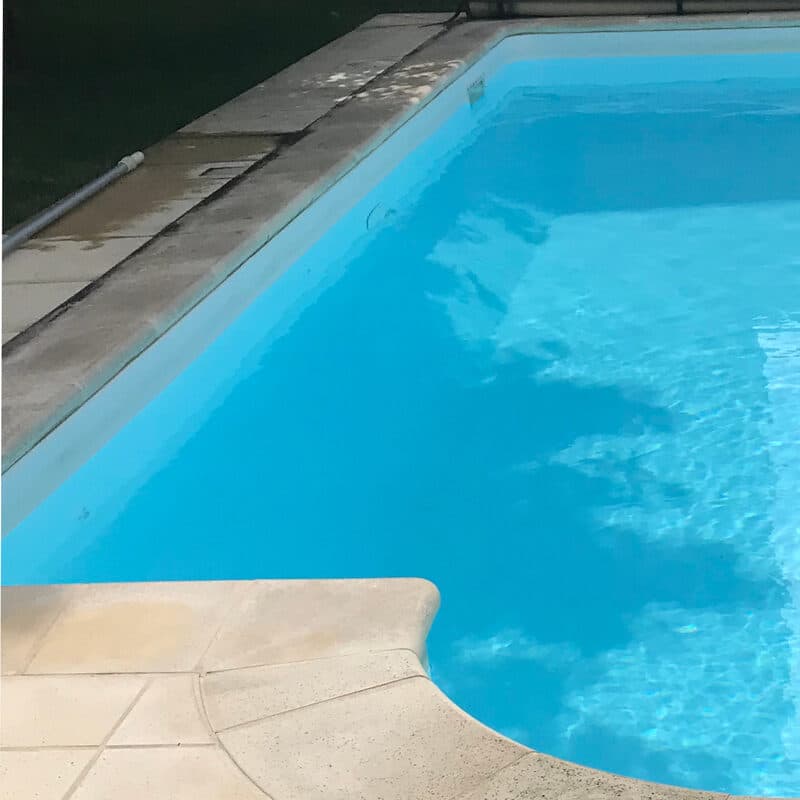
Here is how to price weekly pool service from the three things that set your cost: the chemicals the pool uses, the minutes a stop takes, and the drive between stops. Work out the gallons, price the chemicals from a retailer's own page, time the stop, add the drive, and turn a cost per visit into a flat monthly fee.
What a weekly pool service includes, stop by stop
Write the visit down as a list before you price it, because the list is the quote. A stop every pool gets the same way is easier to time, to train and to defend when a customer asks what the fee buys.
- Test free chlorine, pH and total alkalinity every week; cyanuric acid and calcium hardness on a schedule you set.
- Balance: tablets to the feeder or floater (or liquid chlorine to the water), acid or base as the test calls for.
- Skim the surface; brush or vacuum the floor and walls as the pool needs.
- Empty the skimmer and pump baskets and the cleaner's bag.
- Read the filter pressure gauge and backwash or rinse when due; check the pump, timer and water level.
- Leave a note: what was tested, what was added, what to watch.
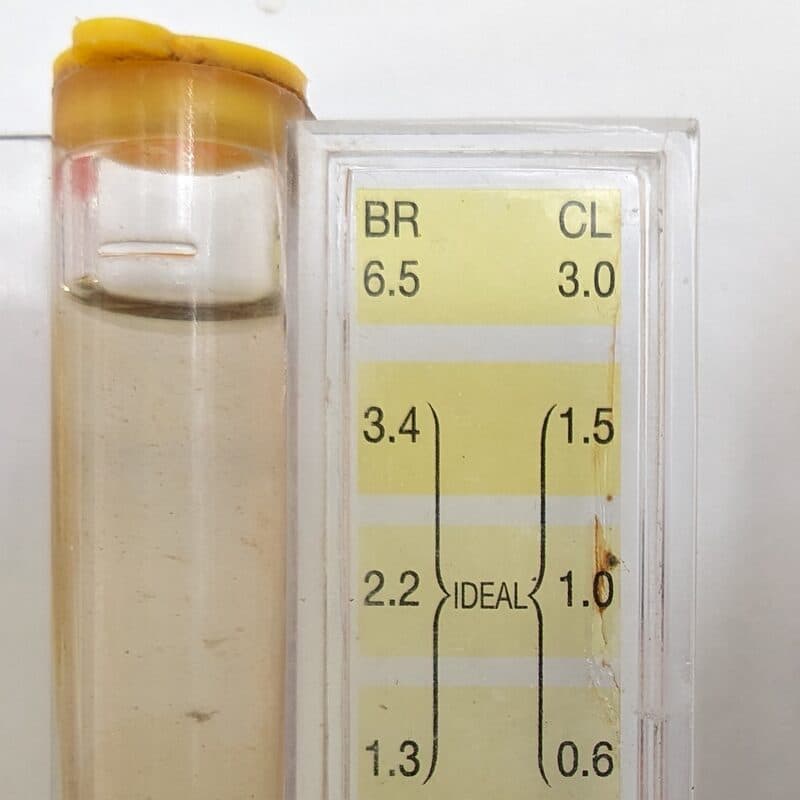
The targets are published. The CDC's home pool and hot tub page, dated May 10, 2024, recommends at least 1 ppm free chlorine and a pH of 7.0 to 7.8, and at least 2 ppm when cyanuric acid or products containing it (dichlor or trichlor tablets) are used; higher pH weakens chlorine and pH below 7.0 corrodes pipes. It also tells the owner to test chlorine and pH at least twice a day, so the quote should say the owner tests between visits.
Step 1: Pool volume in gallons from three measurements
Every dose is written per 5,000 or 10,000 gallons, so the volume is the number the price hangs on. Leslie's volume page gives the formulas: a rectangle is length times width times average depth times 7.5 (about the gallons in a cubic foot); a round pool is 3.14 times the radius squared times depth times 7.5; ovals and kidneys carry their own factors there. Average depth is the shallow end plus the deep end divided by two.
Measure inside the walls on the first visit and write the gallons on the customer record. A 32 by 16 foot rectangle with a 3 foot shallow end and a 7 foot deep end averages 5 feet, so 32 × 16 × 5 × 7.5 = 19,200 gallons.
Step 2: Chemical cost per pool visit from the retailer's page
Price chemicals from your supplier's invoice, with a published page as the reference for the first price book. Leslie's lists its 20 lb bucket of 3 inch jumbo chlorine tablets at $99.99 on October 18, 2026, 90 percent available chlorine from trichlor, "each 8 oz. chlorinating tablet," so a bucket is 320 oz ÷ 8 = 40 tablets, about $2.50 each. The 10 lb bucket's page gives the dose: "One 3 inch chlorine tablet is generally used for every 5,000 gallons of pool water and needs to be replaced every 5 to 7 days."
Acid is the other weekly line. Leslie's lists a two-pack of 1 gallon bottles of muriatic acid at $19.49, 28 to 32 percent strength, about $9.75 a gallon; its page says "2 cups of Muriatic Acid will lower Total Alkalinity by 10 ppm in 10,000 gallons of water" and "Never add more than 16 oz per 10,000 gallons at one time." A gallon is 128 oz, so a 16 oz dose costs about $1.22. Liquid chlorine is priced the same way: the bottle's dose times your cost per ounce.
| Line | Dose from the page | Cost per week |
|---|---|---|
| 3 inch tablets | 1 per 5,000 gallons, replaced every 5 to 7 days: 4 tablets | 4 × $2.50 = $10.00 |
| Muriatic acid | as the test calls for, never more than 16 oz per 10,000 gallons at one time | about $1.22 per 16 oz |
| Shock, algaecide, stabilizer | your dose and your product | your cost, as used |
Step 3: Time per stop and the drive between stops
No page can tell you how long your stop takes; the route can. Time ten stops from truck door to truck door, split them by pool size and debris, and use the average per class. The drive is the second clock, which is why a pool two streets from three others is worth more to you than a lone pool across town.
Labor goes in at a loaded rate: the wage plus payroll taxes, insurance and the days that are not billable. For a published wage to start from, the Bureau of Labor Statistics' Occupational Outlook Handbook puts the median pay of general maintenance and repair workers at $23.84 an hour in May 2025; pool technicians are not a separate line there, so swap in your own payroll figure.
Fuel is a per mile line. The U.S. Energy Information Administration's weekly retail price page put regular gasoline at $4.331 a gallon for the week of October 12, 2026, taxes included; divide the miles between stops by your truck's miles per gallon and multiply.
Worked example: A 19,200 gallon pool, 25 minutes on site, 10 minutes of drive
- Gallons: 32 ft × 16 ft × 5 ft average depth × 7.5 = 19,200 gallons.
- Tablets: 19,200 ÷ 5,000 = 3.84, so 4 tablets a week at $99.99 ÷ 40 = $2.50 each = $10.00.
- Acid: one 16 oz dose at $19.49 ÷ 2 gallons ÷ 128 oz = $0.076 per oz, about $1.22.
- Time: 25 minutes on site + 10 minutes of drive (your own timing) = 35 minutes = 0.58 hours.
- Labor: 0.58 hours × $23.84 = $13.83 at the published wage; use your loaded rate in its place.
- Fuel: 4 miles ÷ 15 miles per gallon (your truck's own figure) × $4.331 = $1.15.
- Cost per visit: $10.00 + $1.22 + $13.83 + $1.15 = $26.20; per month: $26.20 × 52 ÷ 12 = $113.53 before margin.
Result: About $26 of chemical, labor and fuel per visit, $114 a month, with margin, shock and your loaded wage still to add.
What moves the price: size, trees, enclosures, spas
- Gallons: tablets and acid scale with volume, so price by volume class, not one flat rate.
- Debris: a pool under oaks or pines takes more skimming and more filter cleans than one in an open yard.
- Screen enclosures: less litter and a shorter stop, so a screened pool can sit a class below its gallons.
- An attached spa: a second body of water to test and balance, so its own line.
- Distance: a pool off the route pays for the drive.
Pool service pricing per month: turning a visit into a fee
Customers buy a month, not a visit, so the fee is cost per visit times 52 visits a year divided by 12 months, plus the margin you need, rounded to a number that reads cleanly. Decide where chemicals sit and say so: chemicals included is simpler to sell and carries the summer risk on you; service only with chemicals billed as used is fairer on a heavy pool. The tablet page says temperature, chemistry, usage and weather all change the dose, so an included line is a seasonal average. Either way the quote names the visit list, the day, the gallons, and what is not included.
Seasons change the arithmetic: where pools close for winter the fee covers the open months, and where they stay open a cold pool uses less chlorine and less time. Put the season rule in the quote so the first cold month is not an argument.
Green to clean pool price, filter cleans, openings and closings
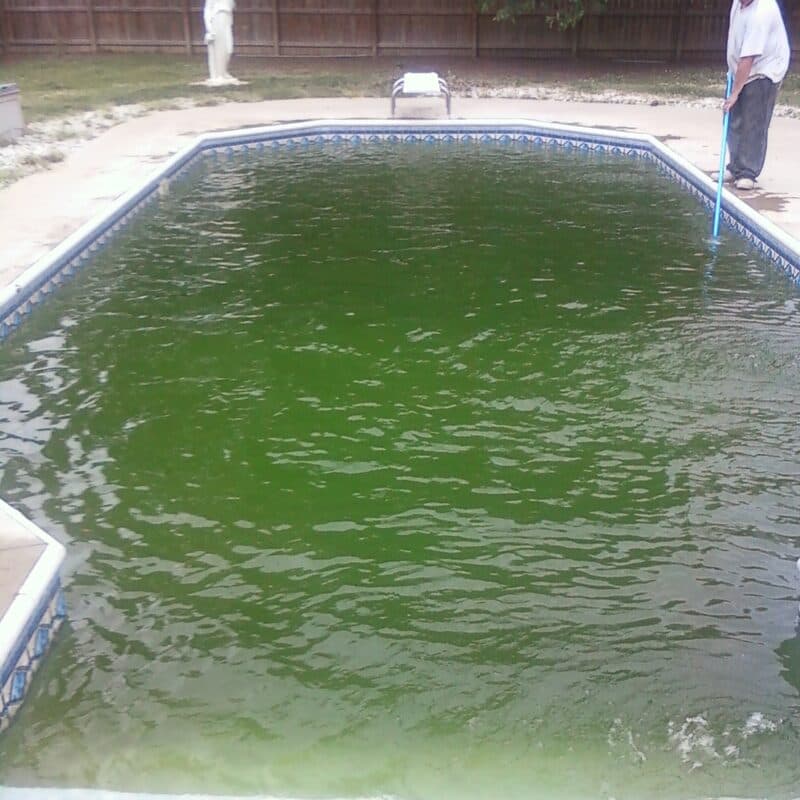
A green pool is never part of the weekly fee. Quote it after you have seen it, as a flat job with chemicals billed as used, because the shock and the vacuuming depend on how far gone it is. The weekly service starts once the water is clear, and the quote says so.
- Filter cleans: a cartridge rinse or a DE teardown is a scheduled extra, its interval in the plan and its price on the line.
- Openings and closings: the cover, the lines, the balance, the equipment, each a flat job.
- Equipment repairs: a pump seal, a timer, a heater call, quoted separately.
Do you need a pool service license to clean and balance a pool?
It depends on the state and what you touch. Florida's contractor statute, section 489.105, defines a swimming pool/spa servicing contractor and draws the line: installing, modifying, substantially disassembling or replacing equipment attached to the pool for water treatment or cleaning "requires licensure; however, the usage of such equipment for the purposes of water treatment or cleaning does not require licensure." It adds that "Water treatment that does not require such equipment does not require a license," and neither does cleaning that does not affect the structural integrity of the pool or its equipment.
So a Florida route that tests, balances, skims and empties baskets runs without a contractor license, and the day a tech replaces a pump the work needs one. Other states draw the line elsewhere and cities add business licenses of their own; read your state's page before the first repair call.
Good to know: This is general information, not legal advice. Statutes and rules change; read the current text and ask your state licensing board or a lawyer before you rely on it.
Billing after each visit and keeping the route
A weekly route lives or dies on the office side: the invoice going out without a Friday of typing, the money arriving without a Friday of calls. In MakeHay a pool is a recurring service with its visits on the calendar for the crew; invoices go out by email and the customer pays by card or bank online, and a repeat customer can be put on autopay; and the customer record holds the contacts, job sites, history and balance in one place, the same screen whether the company does pools or irrigation. Free, every team member included.
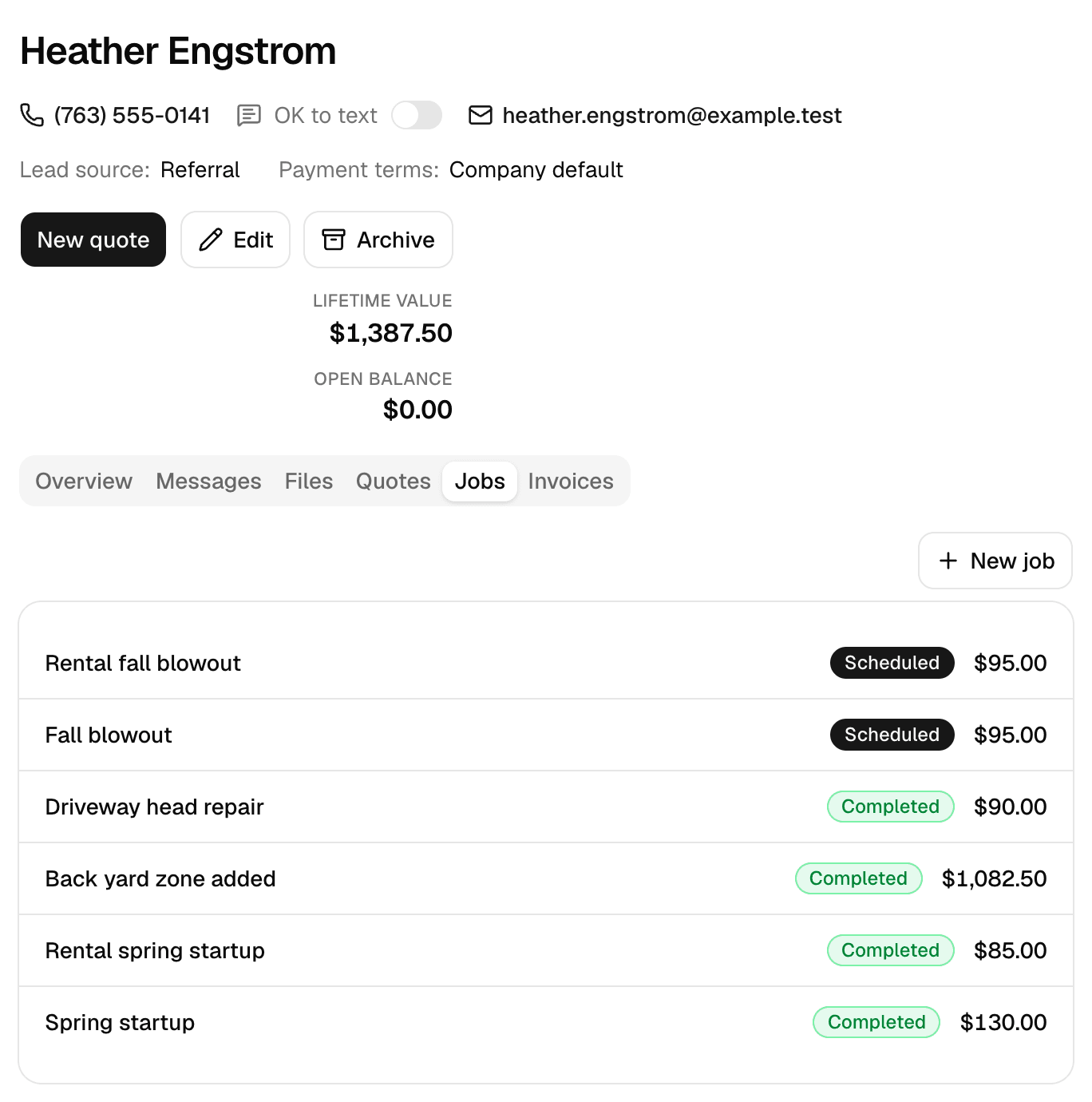
The visit list on the customer record is what a pool customer asks for when the water goes cloudy.
Put the gallons, the visit list and the season rule on the record, give the customer the portal link where every invoice and note lives, and the fee holds. A route priced from its own stop times and the retailer's own prices still makes money in August.
FAQ
What chlorine and pH should a weekly pool service aim for?
The CDC's home pool page recommends at least 1 ppm free chlorine, at least 2 ppm when stabilized chlorine (dichlor or trichlor) is used, and a pH of 7.0 to 7.8; it says owners should use a DPD test kit, and that test strips are less accurate.
Should the weekly fee include chemicals?
Either works if the quote says which. Chemicals included is simpler to sell and puts the summer risk on the company; service only with chemicals billed as used is fairer on a heavy pool. Price an included line from a seasonal average, since the tablet page says the dose moves with temperature, usage and weather.
Does a pool cleaner need a contractor license in Florida?
Under section 489.105 of the Florida Statutes, water treatment that does not require taking equipment apart, and cleaning that does not affect the structure of the pool or its equipment, need no license; installing, modifying, substantially disassembling or replacing attached equipment does. Other states differ.
Sources
- CDC: Home Pool and Hot Tub Water Treatment and Testing · Recommends at least 1 ppm free chlorine in pools and at least 3 ppm in hot tubs, and a pH of 7.0 to 7.8; with cyanuric acid or products containing it (dichlor or trichlor) in pools, a pH of 7.0 to 7.8 and at least 2 ppm chlorine; higher pH reduces chlorine's ability to kill germs, especially above 8.0, and lower pH, especially below 7.0, makes pipes more likely to corrode; test chlorine and pH at least twice a day; a DPD test kit is the most accurate option and test strips are less accurate; page dated May 10, 2024. (accessed October 18, 2026)
- Leslie's: How To Calculate Pool Volume · Rectangle or square: Length × Width × Average Depth × 7.5, with 7.5 as about the gallons in a cubic foot; round: 3.14 × Radius × Radius × Average Depth × 7.5; oval: 3.14 × Length × Width × 0.25 × Average Depth × 7.5; kidney: (A + B) × Length × 0.45 × Average Depth × 7.5; average depth shown by example as the shallow and deep depths added and divided by 2, (3 + 8) ÷ 2 = 5.5 feet, and most round pools have a single depth; no date shown. (accessed October 18, 2026)
- Leslie's: 3 in Jumbo Chlorine Tablets, 20 lbs Bucket · $99.99, reduced from $119.99, for a 20 lb bucket of 3 inch tablets, 90 percent available chlorine from 99 percent trichlor; the details name "each 8 oz. chlorinating tablet"; the page itself states no tablet count and no dose; Leslie's online listing showing the Latham, NY store, October 18, 2026. (accessed October 18, 2026)
- Leslie's: 3 in Jumbo Chlorine Tablets, 10 lbs Bucket · FAQ: "One 3 inch chlorine tablet is generally used for every 5,000 gallons of pool water and needs to be replaced every 5 to 7 days"; a 15,000 gallon pool "would generally need three 3 inch tablets per week"; water temperature, water chemistry, pool usage and weather can all change the amount needed; $69.99 for the 10 lb bucket on October 18, 2026. (accessed October 18, 2026)
- Leslie's: Muriatic Acid 2-Pack of 1 Gallon Bottles · $19.49 for two 1 gallon bottles, 28 to 32 percent strength; "2 cups of Muriatic Acid will lower Total Alkalinity by 10 ppm in 10,000 gallons of water"; "Never add more than 16 oz per 10,000 gallons at one time"; Leslie's online listing showing the Latham, NY store, October 18, 2026. (accessed October 18, 2026)
- Bureau of Labor Statistics, Occupational Outlook Handbook: General Maintenance and Repair Workers · Median pay of $23.84 per hour and $49,590 per year in May 2025, from the Occupational Employment and Wage Statistics program; "General maintenance and repair workers fix and maintain machines, mechanical equipment, and buildings." (accessed October 18, 2026)
- U.S. Energy Information Administration: Gasoline and Diesel Fuel Update · U.S. regular gasoline retail price of $4.331 per gallon for the week of October 12, 2026, and on-highway diesel at $6.179 per gallon, both including all taxes. (accessed October 18, 2026)
- Florida Statutes, section 489.105: Definitions (Construction Contracting) · Paragraph (l) defines "Swimming pool/spa servicing contractor" as a contractor whose scope involves "the repair and servicing of a swimming pool, or hot tub or spa, whether public or private"; installation, construction, modification, substantial or complete disassembly or replacement of equipment permanently attached for water treatment or cleaning "requires licensure; however, the usage of such equipment for the purposes of water treatment or cleaning does not require licensure" unless the usage involves those things; "Water treatment that does not require such equipment does not require a license"; a license is not required for cleaning "in a way that does not affect the structural integrity of the pool or spa or its associated equipment"; filter changes are excluded from the disassembly that needs a license. (accessed October 18, 2026)