Snow Removal Contract Clauses Every Contractor Needs
Snow removal contract clauses in plain words: trigger depth, the service clock, scope, per push or seasonal, indemnity limits, insurance, the log, renewal.
The MakeHay team · · 11 min read
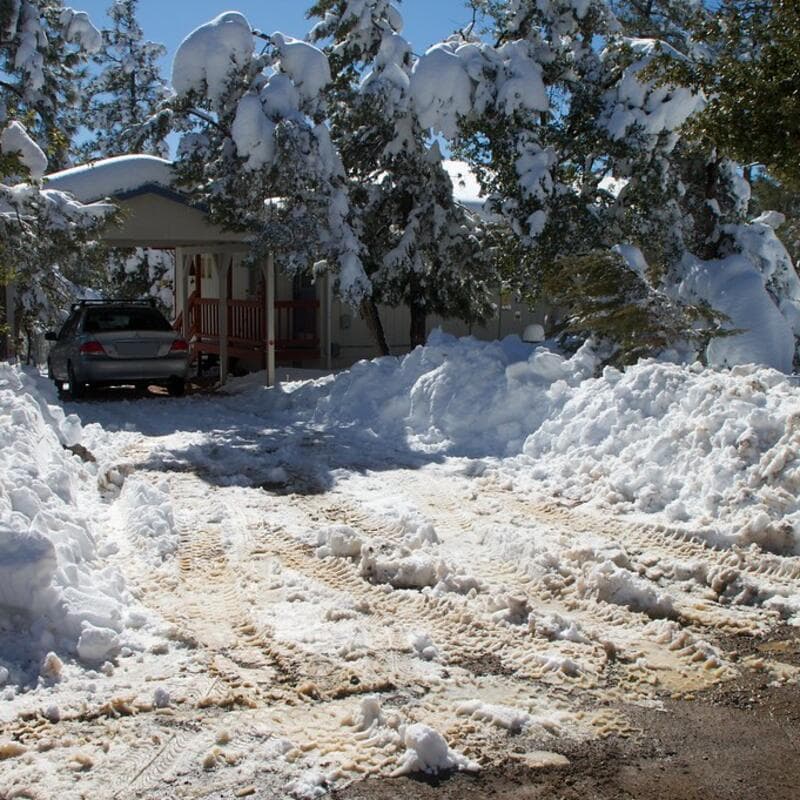
Snow removal contract clauses do two jobs: they tell the crew what to do at three in the morning, and they tell a judge what was promised when someone falls in the lot. The clauses below cover both jobs, in words a customer can read.
Trigger depth: how much snow starts service, and who measures it
A trigger is the accumulation that starts plowing, and nothing else. Snow plow trigger depth: 1 inch vs 2 inch prices the two common triggers; this post is about the wording. Write the number, the surface it applies to, and the ice rule as its own sentence, because freezing rain on a dusting is slick with the trigger unmet.
Then say how the depth is read, because a ruler in a drift and one on a windswept lane disagree. The National Weather Service's Denver and Boulder office measures new snow on a snowboard, a light white board laid on the old snow in a flat and somewhat open area away from buildings and trees and clear of drifts, wiped clean "every 6 hours if possible"; where drifting occurred it says to take around 5 readings and average them, and to record snowfall to the nearest tenth of an inch.
A clause that borrows the method: accumulation is measured by the Contractor on a flat, open part of the site away from drifts, averaged across several readings, at the start of each visit; the Contractor's reading governs unless the Customer disputes it in writing the same day.
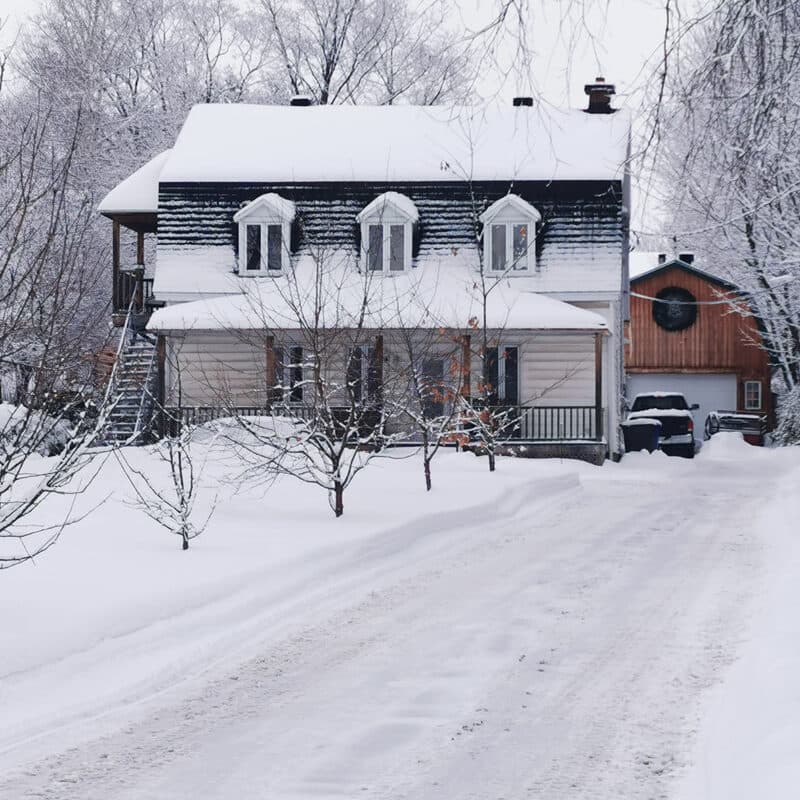
Service window and response time: the clock the customer reads
Your customer already lives under a clock. Minneapolis gives a house 24 hours after it stops snowing to clear its sidewalk and every other property 4 daytime hours (8 a.m. to 5 p.m.); the city inspects, clears what is still covered and bills the owner. Your window has to be shorter than the city's, and your contract has to say when the clock starts.
Write the start as the end of snowfall, with your own number of hours for lots and a separate one for walks and entrances. For a storm that keeps falling, say what happens during it: lanes and entrances kept open on a return interval, the full clean after. SIMA's key claims documentation list includes a site map that marks priority areas, pedestrian access routes, hours of operation and the order in which areas are serviced; attach the map to the contract.
What is included: walks, salt, hauling and the lines left out
- Every surface by name and the service it gets; the exclusions are the sentences you will read aloud in a deposition.
- Lots and drive lanes: plowed, with the stacking spots on the map, away from hydrants and exits.
- Walks, steps and entrances: shoveled or blown, full width, with the walks that are not yours named.
- Deicing: which surfaces, which material, on what rule, and whether a salt-only visit is billable.
- Hauling, loading docks, dumpster pads, fire lanes: named in or named out.
- Between-storm patrol and refreeze checks: in or out, because the hours between visits are where the falls happen.
When a customer tells you to skip an area or hold salt, the instruction belongs in the file: SIMA's list of key claims documentation includes a follow-up email for when a property manager or owner gives you direction that may affect your liability later, its example an instruction not to service a certain area.
Slip and fall clause: what the contract can promise and what it cannot
No clause makes a fall someone else's problem; what the contract does is define the duty. A snow liability column in Landscape Ontario says "The contract is the primary source of the snow contractors' obligations" and that failing to meet them "will be evidence that the snow contractor failed to take reasonable care." A missed window is evidence against you.
So the clause is a scope clause in disguise: the Contractor is responsible for the services listed, on the surfaces listed, within the windows listed, and not for conditions between visits unless patrol is included, for excluded surfaces, or for areas blocked by parked cars. The word guarantee appears nowhere.
Snow removal indemnification clause: the Colorado limit
Customer forms often ask the contractor to cover the owner's mistakes. Colorado's Snow Removal Service Liability Limitation Act draws a line: when the provider is prohibited, by express contract terms or in writing, from mitigating a specific snow, ice or other mixed precipitation event or risk, a clause requiring the provider to indemnify, hold harmless or defend the receiver for the receiver's own acts or omissions is void as against public policy, and the same prohibitions run the other way.
The act covers plowing, shoveling or other snow removal, deicing and the incidental equipment work, and leaves out public roads and public bodies, public utilities, deicing at public airports, and insurance policies, surety bonds and workers' compensation. The clause to write in any state: each party is responsible for its own negligence and that of its employees and subcontractors, and neither indemnifies the other for the other's own acts.
Snow removal insurance requirements the customer will ask for
A commercial customer asks for three things: a certificate of insurance, additional insured status for the owner and the manager, and wording that makes your policy primary and non-contributory, meaning yours pays first. Send the customer's insurance paragraph to your agent before you sign. Colorado's act does not apply to insurance policies, so the additional insured requirement is separate from the indemnity limit.
Per push vs seasonal contract: the price model and its clauses
Per push pays for each visit, seasonal pays a fixed sum for the winter, per event pays once per storm however many visits it takes. How to price a seasonal snow plowing contract works the arithmetic; each model needs its own clauses.
- Per push: define a push (one full clearing after the trigger is met), say whether a return during a long storm is a second push, and price a salt-only visit on its own line.
- Seasonal: the season's dates, the cap (pushes or inches after which a per push rate applies), what is owed in a winter with no snow, and the installment schedule.
- Per event: snowfall separated from the next by a stated number of hours without accumulation, so a two-day storm is one event.
- All three: the deicing, hauling and hourly rates for anything outside the scope.
In MakeHay, a snow quote carries the model as line items in your units, per push, per month or flat per event, and the customer approves and signs it online from a link (get a quote approved and signed). The contract goes to the same customer for e-signature through their portal link, no app and no password (request documents and signatures), and a seasonal account bills as recurring service. The snow plowing page shows the starter price list.
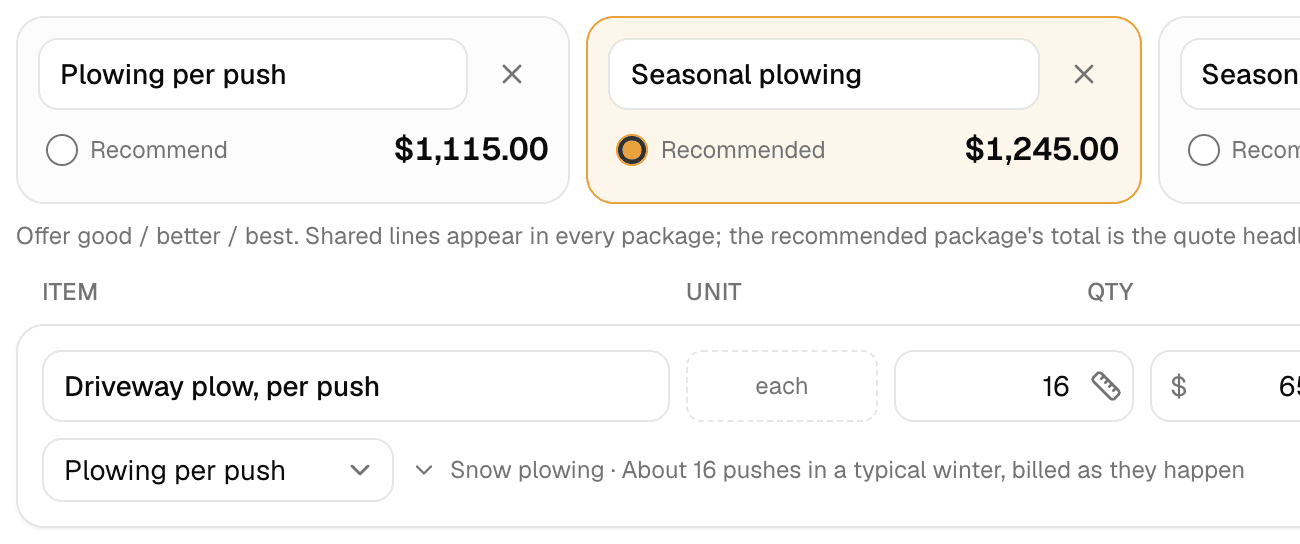
The price model on the quote matches the clause set in the contract.
The plow log is the record: what each line has to carry
The Landscape Ontario column says the best preparation is "to keep accurate, contemporaneous, and detailed documents of your snow removal activities," SIMA says to save the forecast you acted on because it "will not be available again," and the column lists what a plow log holds: the time of removal, the equipment used, the precise location, the contractors who performed it, the weather and the temperature; the salt log adds the type and amount of salt or ice melt and the spreading equipment. Snow plow log template is built on those fields.
The clause: the Contractor keeps a service record for each visit showing the time, the surfaces serviced, the material applied and the conditions observed, and provides a copy on written request. Keep it longer than your state's time limit for an injury claim.
Damage to turf, curbs and mailboxes: who marks and who pays
A plow finds every edge the snow hides. Before the season, the edges, islands, drain grates, speed bumps and sprinkler heads are staked and the Contractor photographs the site as the baseline. The Contractor repairs damage its equipment causes to marked or visible features, is not responsible for unmarked features under the snow, and repairs scraped turf along the marked edges by a stated spring date.
Snow contract cancellation clause and auto-renewal, under the law
A contract that renews itself is convenient for both sides and regulated for one of them. New York's General Business Law section 527-a makes it unlawful for a business making an automatic renewal offer to a consumer to skip any of these: terms disclosed clearly and conspicuously before consent is asked for, affirmative consent before any charge, an acknowledgment the consumer can keep with the terms, the cost, the cancellation deadline and how to cancel, and a cancellation mechanism as easy as the sign-up, in the same medium. For a paid term of a year or longer that renews for six months or longer, a reminder goes out at least fifteen days and not more than forty-five days before the cancellation deadline.
That is one state's consumer rule; a driveway customer is a consumer, a property management company usually is not, and other states set their own windows. Apply the strictest rule you work under to everyone: the term's dates and the renewal sentence on the first page, a dated reminder before each renewal, cancellation by one email, a mid-season settle-up at the per push rate, and the Contractor's own right to end service for non-payment or an unsafe site.
Crew safety lines the contract should allow for
OSHA's winter weather pages tell employers to clear walking surfaces and spread deicer as quickly as possible after a storm, to put workers in insulated, water resistant boots with good treads, and never to clear a snow blower jam by hand; its cold stress page says to schedule frequent short breaks in warm dry areas and to work in pairs. Add a sentence that the Contractor may pause service when conditions are unsafe and will resume when they are not, with the pause noted in the log.
Good to know: This is general information, not legal advice. The statutes quoted are Colorado's and New York's; your state's rules differ. Have a lawyer in your state read the contract once before the season.
FAQ
Is a snow plowing contract template enough?
A template is a start, not a contract. The clauses that lose cases are site-specific: the trigger and where it is measured, the clock, the surfaces excluded, the map, the insurance wording and the state statute on indemnity.
Can a snow removal contract make the contractor liable for every fall?
It can try, and in some states it fails. Colorado's act voids a clause that makes the provider indemnify, hold harmless or defend the receiver for the receiver's own acts or omissions when the provider was prohibited, by express contract terms or in writing, from mitigating that event. In any state, the contract defines the duty and the records show whether it was met.
How far ahead does a customer have to be reminded of a renewal?
Under New York's consumer rule, for a paid term of a year or longer that renews for six months or longer, at least fifteen days and not more than forty-five days before the cancellation deadline. Other states set their own windows.
Who decides how much snow fell?
The contract does. Name the person (the Contractor at the start of each visit), the method (a flat and somewhat open area away from buildings, trees and drifts, around five readings averaged, recorded to the nearest tenth of an inch, as the National Weather Service offices describe) and how a dispute is raised: in writing, the same day.
Sources
- Colorado Revised Statutes 13‑21‑129: Snow Removal Service Liability Limitation Act · Subsection (3): a provision in a snow removal and ice control services contract "is against public policy and void" if, where the service provider is prohibited "by express contract terms or in writing" from mitigating "a specific snow, ice, or other mixed precipitation event or risk," it requires the provider to indemnify, hold harmless or defend the receiver for damages from the acts or omissions of the receiver or its agents or employees, and the same for provisions running from receiver to provider; subsection (2)(d) defines the contract as one for "Plowing, shoveling, or other removal of snow or other mixed precipitation from a surface," deicing services, or a service incidental to those "including operating or otherwise moving snow removal or deicing equipment or materials"; subsection (4) exempts contracts for public roads or with public bodies, contracts with a public utility, deicing at public airports, and insurance policies, surety bonds and workers' compensation; subsection (5) leaves other law's liabilities, immunities and defenses untouched; the page states it is current through Fall 2025. (accessed October 18, 2026)
- New York General Business Law section 527-a: Automatic renewal and continuous service · It is unlawful for a business making an automatic renewal or continuous service offer to a consumer to fail to disclose the terms clearly and conspicuously before asking for consent, to charge without the consumer's affirmative consent, to fail to provide a retainable acknowledgment with the terms, cost, cancellation deadline and cancellation method, or to fail to offer a cancellation mechanism as easy to use as the one used to consent, in the same medium; for an initial paid term of one year or longer that renews for six months or longer, notice at least fifteen days before and not more than forty-five days before the cancellation deadline; material changes including price increases need notice at least five business days before but no more than thirty days before; exemptions for franchised services, entities regulated by the department of financial services, alarm operators, banks and service contract sellers; most recent revision dated November 7, 2025. (accessed October 18, 2026)
- National Weather Service, Denver/Boulder: Measuring Snow · Snow boards "are laid on top of the old snow," are made of thin lumber or light material and "should also be painted white"; "Look for a flat and somewhat open area away from buildings and trees" and "Avoid areas of drifted snow"; boards and measuring surfaces "should be wiped clean of snow every 6 hours if possible" and moved to a new spot after each observation; "Take around 5 readings and average your measurements, especially if drifting occurred"; new snowfall is recorded to the nearest tenth of an inch and total depth to the nearest whole inch. (accessed October 18, 2026)
- National Weather Service, Fort Worth/Dallas: Measuring Snowfall Help · "Place your snowboard in an unrestricted area" away from buildings and trees and "not in an area where drifting snow would result in higher snow depth amounts"; "Round to the nearest tenth of an inch in all cases"; when there was snow on the ground the day before, the new snowfall since the last reading is the difference between the depth just measured and the depth recorded the day before. (accessed October 18, 2026)
- City of Minneapolis: Sidewalk snow clearing · Single-family homes and duplexes: "You must clear sidewalks within 24 hours after it stops snowing"; all other properties: "You must clear sidewalks within 4 daytime hours (8 a.m. to 5 p.m.) after it stops snowing"; "Shovel the entire width of the city sidewalk on your entire property down to bare pavement" and on a corner clear the curb cutouts to the street gutter; the city starts inspecting 24 hours after each snowfall, and if the walk is not cleared by the follow-up inspection, "Crews will remove the snow and ice and bill you," with an unpaid fee added to the property taxes. (accessed October 18, 2026)
- Landscape Ontario: Battle of evidence, the side with the best records often wins a slip and fall lawsuit · Snow Liability column by Visnja Jovanovic, Moodie Mair Walker LLP, September 15, 2019: "The contract is the primary source of the snow contractors' obligations"; failing to meet contractual obligations "will be evidence that the snow contractor failed to take reasonable care"; "The best preparation is to keep accurate, contemporaneous, and detailed documents of your snow removal activities"; plow logs record "The time of snow removal, equipment used to remove the snow, precise location of snow removal," the snow contractors performing it, weather and temperature; salt logs record the time, "type of salt or ice-melt, amount of salt used, equipment used to spread salt," location, contractors, weather, temperature and "sun/overcast/dark"; patrol logs record the time, who patrolled, where they walked and what they observed; a diary of communications with the owner or property manager keeps emails, call-outs, special requests or concerns, offers to pre-salt, warnings of approaching bad weather and reports of damage. (accessed October 18, 2026)
- Snow and Ice Management Association: Protect others, protect yourself · By Grant Harrison, president of Nextra Consulting, Ingersoll, Ontario; under the heading "Key claims documentation" the list includes "Follow-up emails for when a property manager or owner gives you direction that may impact your liability later," with the example of being instructed not to service a certain area of the property; salt records that "Record actual, quantifiable amounts of materials used, including bagged and bulk materials"; saved forecasts, because "This forecasted information will not be available again, so record it"; an email before an event with the current forecast and plan of action; and "Site maps that clearly identify (at a minimum) where to pile snow, catch basins, handicap spots, emergency doors," priority areas, pedestrian access routes, hours of operation and the order of serviced areas. (accessed October 18, 2026)
- OSHA: Winter Weather, Introduction · "Winter weather presents hazards including slippery roads/surfaces, strong winds and environmental cold"; employers should clear snow and ice from walking surfaces and spread deicer "as quickly as possible after a winter storm"; workers who must walk on snow or ice should "Wear footwear that has good traction and insulation" such as insulated, water resistant boots or rubber overshoes with solid treads, and "Take short steps and walk at a slower pace"; employers should "plan ahead for safe snow removal" and "Provide required fall protection and training when working on the roof or elevated heights." (accessed October 18, 2026)
- OSHA: Winter Weather, Hazards and Precautions · "employers should clear walking surfaces of snow and ice, and spread deicer, as quickly as possible after a winter storm"; "A pair of insulated and water resistant boots with good rubber treads is a must" for walking; for shoveling, "Workers should warm-up before the activity, scoop small amounts of snow at a time"; "Snow blowers commonly cause lacerations or amputations when operators attempt to clear jams with the equipment turned on" and "Never attempt to clear a jam by hand"; employers should set and enforce driver safety policies. (accessed October 18, 2026)
- OSHA: Winter Weather, Cold Stress · "Cold stress occurs by driving down the skin temperature, and eventually the internal body temperature"; wind and wetness, "even from body sweat," speed heat loss; employers should train workers to recognize cold stress, "Schedule frequent short breaks in warm dry areas, to allow the body to warm up," "Schedule work during the warmest part of the day," and "Use the buddy system (work in pairs)." (accessed October 18, 2026)