How to Price Deck Staining per Square Foot: A Worked Job
How to price deck staining per square foot: measure boards, rails and stairs, price prep as its own line, use the maker's coverage, add labor and weather.
The MakeHay team · · 11 min read
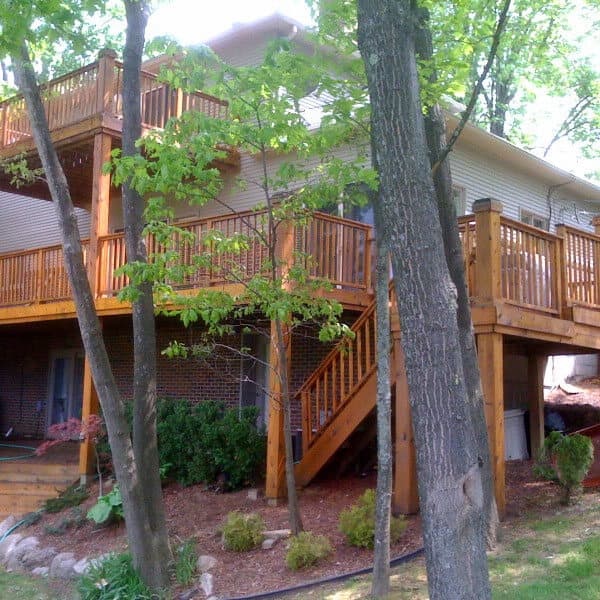
Here is how to price deck staining per square foot so the number holds on a deck with sixty feet of railing and a flight of stairs: measure boards, rails and stairs as three things, put prep on its own line, take coverage and dry time from the maker's page, and put your labor rate underneath before you look at what homeowners say they pay.
How to measure a deck for staining: boards, rails and stairs
A deck is three jobs in one: a flat floor, stairs with many edges, and railings whose two faces of rails, posts and balusters never show up in length times width.
- Step 1: Boards: length times width of the floor in feet, no deduction for the gaps. An L-shaped deck is two rectangles added together.
- Step 2: Stairs: count the treads and measure one; treads times width times depth is the stair area, on its own line.
- Step 3: Railings: linear feet of guard along every open side, plus the stair rail. The model residential code puts a guard at least 36 inches high wherever the floor is more than 30 inches above grade, so even a short rail is two faces of posts and balusters per foot.
- Step 4: Note what slows the job: lattice skirting, a built-in bench, a pergola.
Price the railing by the foot. Fixr's homeowner survey, updated January 31, 2025, lists railings, handrails and posts at $4 to $12 per linear foot and stairs at $2 to $5 per sq ft, both apart from the board price: a foot of baluster rail takes longer than a foot of decking.
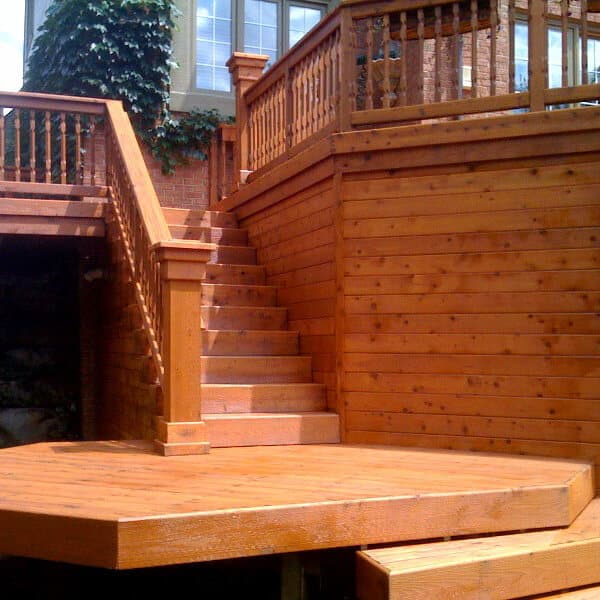
Prep as its own line: wash, strip or sand
The stain makers put the decision in a glass of water. Thompson's WaterSeal says to splash the deck: if the water soaks in and darkens the wood within five seconds, the surface is porous and ready to treat; if it does not, the old finish is still keeping water out. Cabot's Australian Timber Oil page gives a shorter version, a few drops that are quickly absorbed mean the surface is ready to prep, and wants the wood clean, porous and free of previous finishes.
- Wash: Thompson's Heavy Duty Deck Cleaner is ready to use, covers 100 to 250 sq ft per gallon, sits 10 to 15 minutes, gets scrubbed and rinsed; the wood then dries 2 to 3 days.
- Strip: when the water beads or a solid stain is peeling, Thompson's Maximum Strength Deck Stripper covers 150 sq ft per gallon, sits 10 to 15 minutes, gets scrubbed, rinsed and followed by a wood brightener; again 2 to 3 days to dry.
- Sand: Cabot's page calls for 80 to 100 grit where needed, 120 to 180 on rougher surfaces, and has the wood dry in the open air for 3 to 5 days before the oil goes on.
Each is a line with its own square feet: the whole deck for the wash, the peeling areas for the strip, the gray boards for the sand. Fixr's survey prices them apart from the stain too: cleaning $0.25 to $0.50 per sq ft, stripping $1 to $3, sanding $1 to $4.
Deck stain coverage per gallon, from the makers' pages
Coverage is the number the label gives and the wood takes away: smooth new cedar drinks less than old pressure-treated pine, so every maker publishes a range. The figures as the pages stated them on October 18, 2026:
| Product | Coverage per gallon | Coats | Dry |
|---|---|---|---|
| Cabot Australian Timber Oil | 250 to 600 sq ft | One only | 24 to 48 hours |
| Thompson's WaterSeal Semi-Transparent | 150 to 400 sq ft | One; a second within 4 hours if more color is wanted | 2 to 4 hours, to the touch in 2 |
| Thompson's WaterSeal Clear Wood Sealer | 200 to 400 sq ft | One light coat | 48 to 72 hours |
| Duckback SuperDeck Semi-Transparent (retailer listing) | 275 to 375 sq ft smooth, 175 to 225 rough | Not stated | 8 hours to the touch, 24 to traffic |
Quote at the low end for an older deck, the high end only for smooth new wood, and round up to whole gallons. Cabot's deck page says to mix the gallons first so the color matches, to coat the end grain heavily, and to brush 2 to 3 boards at a time so wet stain meets wet stain; over-application can peel, crack or leave a sticky surface, and on a new deck the page says one coat only of an oil-based finish, so a second coat is not an upsell. No label prints a rail figure: log the gallons against the feet of rail on the next three jobs and you will have your own.
Deck staining labor hours and the rate underneath them
The Bureau of Labor Statistics puts the median wage for painters, construction and maintenance, at $23.75 an hour in May 2025. That is the wage, not the cost of the hour: in the June 2026 employer cost release, benefits were 30.0 percent of private-industry compensation, so a wage that is 70 percent of the hour's cost makes $23.75 about $34 loaded, before truck, insurance and margin.
Production rates are yours to measure: time the next three jobs in pieces, prep, boards and rails, and keep the minutes per square foot and per foot of rail. The hours come in two visits. The cleaner's page has the wood drying 2 to 3 days after the wash, and Cabot's oil page says 3 to 5 days, so a wash on Monday is a stain on Thursday at the soonest. Price the second trip's travel and setup as hours.
Deck staining cost per square foot in the homeowner survey
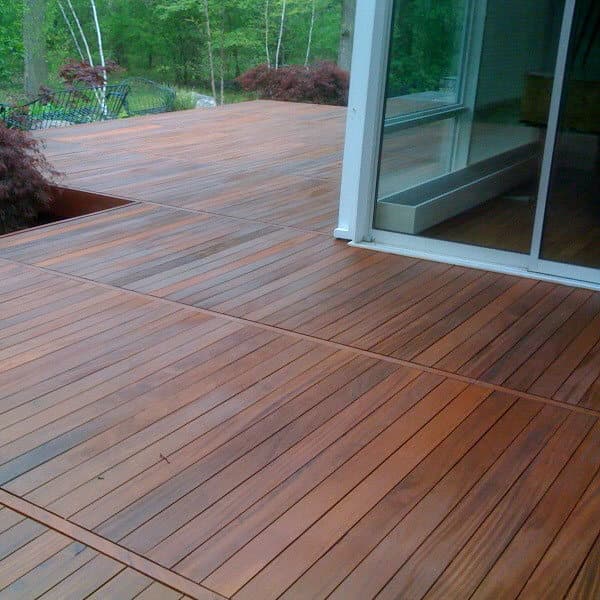
Fixr's survey, updated January 31, 2025, says it costs about $2 to $5 per sq ft to stain a deck including light sanding and sealing, with a national average range of $550 to $850. Those are homeowner reports, not a cost sheet: the ceiling in the customer's mind; the steps above are the floor.
| Line | Survey range |
|---|---|
| Stain, with light sanding and sealing | $2 to $5 per sq ft |
| Cleaning | $0.25 to $0.50 per sq ft |
| Stripping | $1 to $3 per sq ft |
| Sanding | $1 to $4 per sq ft |
| Stairs | $2 to $5 per sq ft |
| Railings, handrails and posts | $4 to $12 per linear foot |
Clean and seal vs strip and stain: good, better, best
The same deck can be three quotes. Good is a wash and a clear sealer: Thompson's clear product takes one light coat at 200 to 400 sq ft per gallon and needs 48 hours to dry. Better is a wash and one coat of semi-transparent stain, the job this post prices. Best is a strip, a brightener, a sanding pass where the boards are furry, and the stain, with the strip line's square feet and the extra drying days on it.
Write each package as its own lines so the customer sees why the numbers differ. In MakeHay a quote can offer good, better and best packages; the customer picks one and approves and signs online.
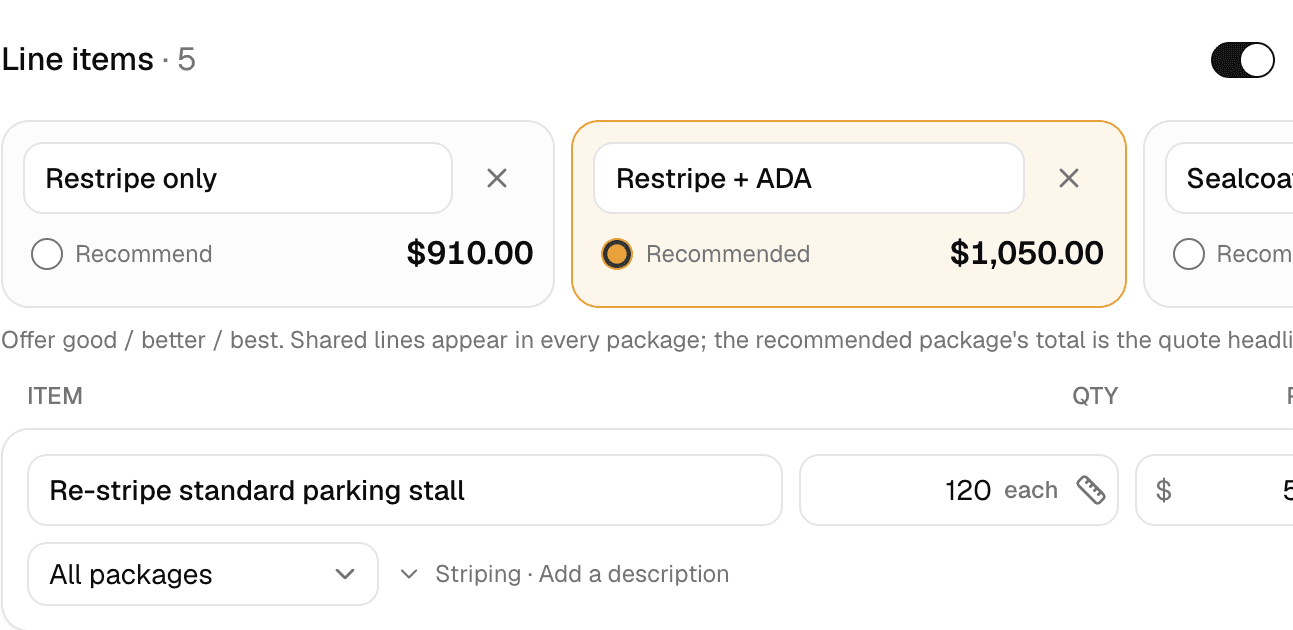
Three packages on one quote let the customer choose the prep level.
Worked example: A 16 by 20 deck with three open sides and six stairs
- Boards: 16 ft × 20 ft = 320 sq ft.
- Stairs: 6 treads × 3 ft wide × 1 ft deep (your tape) = 18 sq ft, its own line.
- Railings: 20 + 16 + 20 = 56 linear ft of guard on three open sides, plus 10 linear ft along the stairs = 66 linear ft.
- Cleaner: 338 sq ft ÷ 100 sq ft per gallon (the low end of 100 to 250, older wood) = 3.4, so 4 gallons.
- Stain: 338 sq ft ÷ 250 sq ft per gallon (the low end of Cabot's 250 to 600) = 1.35 gallons, plus the rail from your own log, call it one more: 3 gallons at your price per gallon.
- Labor: wash visit 2 hours + stain visit 6 hours for boards, both faces of 66 ft of rail and the stairs (your timing) = 8 hours × $34 loaded = $272.
- Survey band for the same deck: boards 320 × $2 to $5 = $640 to $1,600; stairs 18 × $2 to $5 = $36 to $90; rails 66 × $4 to $12 = $264 to $792; cleaning 338 × $0.25 to $0.50 = $85 to $169; total $1,025 to $2,651.
Result: Your floor is $272 of loaded wages plus 4 gallons of cleaner and 3 gallons of stain at invoice, plus truck, insurance and margin; the homeowner band is $1,025 to $2,651, which is $3 to $8 per sq ft of boards with rails and stairs in it, above the $2 to $5 board rate because the rail is most of the brush time.
Weather, dry time and the second visit
The label sets the calendar. Cabot's deck page says to stain when air and wood are between 50 and 90°F, out of direct sun, and not when rain is forecast in the next 12 to 24 hours. Thompson's semi-transparent page says no application if rain is forecast within 24 hours, and that surface and air must stay above 50°F for 48 hours after; its clear sealer page adds that a night below 50°F in that window leaves the finish oily and tacky.
So the stain visit needs a dry deck, a dry forecast and two warm nights, with the wash 2 to 3 days ahead. Put a weather clause on the quote: the visit moves, the stain is not rushed. In MakeHay the calendar shows the forecast for US job sites, with warnings from weather rules you set.
Writing the quote so the customer approves it
Give the customer the arithmetic in the lines: boards per square foot, stairs per square foot, rails per linear foot, prep with its own square feet, and the product named with its coverage range (how to write a service quote customers approve). Stain is bought before the job, so a deposit is fair; how much deposit to ask for covers the state rules.
Add a maintenance line. Cabot's page says that as long as the finish still repels water the stain is still working and the deck may only need a cleaning, a cheaper visit you can book now for next year.
Good to know: This is general information, not legal or building code advice. The guard figures are the model code as the cited page states it; your local code may differ, so ask the building department.
FAQ
What is the best temperature to stain a deck?
Cabot's deck page puts it between 50 and 90°F for both air and wood, out of direct sun, with no rain in the forecast for the next 12 to 24 hours. Thompson's says no rain within 24 hours and that surface and air need to stay above 50°F for 48 hours after, so check the overnight low for two nights, not only the afternoon high.
How much should a contractor charge to stain a deck?
Build it up: loaded wages for your hours, cleaner and stain at invoice, the second visit, truck, insurance and margin. Then compare with the homeowner survey: about $2 to $5 per sq ft for boards, $2 to $5 per sq ft for stairs and $4 to $12 per linear foot for railings. A floor above the band needs a reason the customer can read, such as a strip line.
Does a deck need stripping or just cleaning?
Splash water on it. If it soaks in and darkens the wood within five seconds, a wash is enough. If it beads, the old finish is still sealing the surface and needs stripping, then brightening, before a penetrating stain can get in. Peeling solid stain is a strip job on sight.
Sources
- Fixr: How much does it cost to stain a deck? · Homeowner survey: about $2 to $5 per sq ft to stain a deck including light sanding and sealing; national average range $550 to $850, average $750; by size, 8 by 10 (80 sq ft) $160 to $400 up to 20 by 20 (400 sq ft) $800 to $2,000; stripping $1 to $3 per sq ft, sanding $1 to $4, cleaning $0.25 to $0.50, power washing $0.30 to $0.40; stairs $2 to $5 per sq ft; railings, handrails and posts $4 to $12 per linear foot; updated January 31, 2025. (accessed October 18, 2026)
- Cabot: Australian Timber Oil product page · Coverage "250 ft²/gal - 600 ft²/gal"; recommended coats 1, "Apply one coat only"; dry time 24 to 48 hours; "Apply when air and surface temperatures are between 50 ˚F and 90 ˚F"; surface must be clean, porous and free of previous finishes, tested with a few drops of water; let wood dry in the open air for 3 to 5 days; sand with 80 to 100 grit where needed, 120 to 180 on rougher surfaces; clean with Cabot Wood Cleaner, brighten or strip as needed. (accessed October 18, 2026)
- Cabot: Staining Exterior Decks · Stain when air and wood surface temperatures are between 50 and 90°F; avoid direct sunlight; do not stain if rain is forecast within the next 12 to 24 hours; wash with the wood cleaner, rinse and let the deck dry two to three days; mix multiple gallons together for color consistency; heavily coat the open end grain; brush 2 to 3 boards at a time end to end, keeping the leading edge wet; one coat of oil-based finish on new decks; over-application can peel, crack or leave a sticky surface; if the stain still repels water it is still performing and the deck may only need cleaning. (accessed October 18, 2026)
- Thompson's WaterSeal: Semi-Transparent Wood Sealer · Coverage 150 to 400 sq ft per gallon depending on porosity; one coat recommended, a second within 4 hours of the first for more color; dry 2 to 4 hours, dry to the touch within 2 hours under normal conditions; "Do not apply product if rain is forecasted within 24 hours of application"; surface and air temperature above 50°F during application and for 48 hours after; let a damp surface dry at least 48 hours; wait 30 days on new pressure-treated lumber; splash test: water that soaks in and darkens the surface within five seconds means it is ready to treat. (accessed October 18, 2026)
- Thompson's WaterSeal: Clear Wood Sealer · Coverage "200 ft²/gal - 400 ft²/gal"; "Only one light coat is necessary in most applications"; dry time 48 to 72 hours, "Allow at least 48 hours to dry"; no application if rain is forecast within 24 hours; surface and air above 50°F during application and for 48 hours after, and overnight temperatures below 50°F within 48 hours can cause oiliness and tackiness; same cleaning, 48 hour drying, 30 day and splash test prep as the semi-transparent page. (accessed October 18, 2026)
- Thompson's WaterSeal: Heavy Duty Deck Cleaner · Ready to use; coverage "100 ft²/gal - 250 ft²/gal" varying with porosity; wait 10 to 15 minutes and then scrub the surface with a stiff synthetic brush, not letting it dry; rinse thoroughly with a garden hose or pressure washer; allow the wood to dry 2 to 3 days, depending on weather, before an oil-based waterproofer or stain; 1 gallon container. (accessed October 18, 2026)
- Thompson's WaterSeal: Maximum Strength Deck Stripper · Coverage 150 sq ft per gallon, varying with porosity; wait 10 to 15 minutes then scrub with a stiff synthetic brush; removes oil- and water-based solid and semi-transparent stains and tinted and clear waterproofers; rinse thoroughly with a hose or pressure washer, then use a wood brightener to neutralize the surface; wait 2 to 3 days for the wood to dry before a waterproofer or stain. (accessed October 18, 2026)
- Do it Best: Duckback SuperDeck Semi-Transparent Exterior Stain, Cedar, 1 gallon · Retailer listing: "Covers approximately 275 to 375 Sq. Ft. per gallon on smooth surfaces" and "175 to 225 Sq. Ft. per gallon on rough surfaces"; "Approximate drying time is 8 hours to touch and 24 hours for traffic"; no price shown online ("In-store price may vary"). (accessed October 18, 2026)
- Bureau of Labor Statistics, Occupational Outlook Handbook: Painters, Construction and Maintenance · "The median annual wage for painters, construction and maintenance was $49,400 in May 2025"; Quick Facts 2025 median pay $23.75 per hour; 326,900 jobs in 2025. (accessed October 18, 2026)
- Bureau of Labor Statistics: Employer Costs for Employee Compensation, June 2026 · "Total employer compensation costs for private industry workers averaged $46.89 per hour worked in June 2026"; wages and salaries $32.82 per hour; benefits $14.07 per hour, "the remaining 30.0 percent" of compensation. (accessed October 18, 2026)
- Weyerhaeuser: Deck Railing Height Codes, What Dealers Need to Know · Cites IRC R312.1.2: required guards "shall not be less than 36 inches (914mm) in height"; R312.1.1 applies to open-sided walking surfaces "located more than 30 inches (762 mm) measured vertically to the floor or grade below"; stair guards at least "34 inches (864mm)" measured from the nosings; posted August 5, 2025. (accessed October 18, 2026)