How to Sell Holiday Lighting to Businesses and HOAs
How to sell holiday lighting to businesses and HOAs: who buys, the July pitch, a proposal with install and removal dates and a per season price, insurance.
The MakeHay team · · 11 min read

Here is how to sell holiday lighting to businesses and HOAs, the accounts that sign for three seasons at a time and renew by email. A business buys a date, a look and a vendor it never has to think about again; a board buys the same plus a paper trail.
Who buys commercial Christmas light installation
Four kinds of buyers, each wanting something different. The retail center and the restaurant want the lights up before the shopping season: the National Retail Federation defines the holiday season as November 1 through December 31 and, in its October 15, 2026 forecast, expects retail sales in those two months to reach $1.013 trillion, up 4.2 percent over 2025. For that owner a lit storefront on November 1 is a sales decision.
The HOA is the largest pool of accounts a lighting crew never calls. The Foundation for Community Association Research's 2025 Statistical Review, released April 1, 2026, counts 373,000 community associations in the US, 78.1 million Americans living in them, and $124.2 billion paid in assessments. Each has an entrance, a clubhouse and a board that votes on a budget with a line for the holidays.
- Retail centers and plazas: the roofline, the entrance sign, the trees in the parking islands. The property manager signs.
- Restaurants and hotels: the entry, the patio, the trees out front. The owner signs and wants it done before the lunch crowd.
- HOAs and condominiums: the entrance monument, the clubhouse, the guardhouse. The board approves; the manager runs the contract.
- Towns and business districts: light poles, the gazebo, the main street trees. Bid rules apply and a council meeting sets the calendar.
The crew that already mows or plows for a property has the inside track: the US Bureau of Labor Statistics page for grounds maintenance workers says some of that work is seasonal and that workers sometimes provide other services in the winter months. Lights fit between the last cleanup and the first plow.
When to pitch holiday lighting: late summer, not November
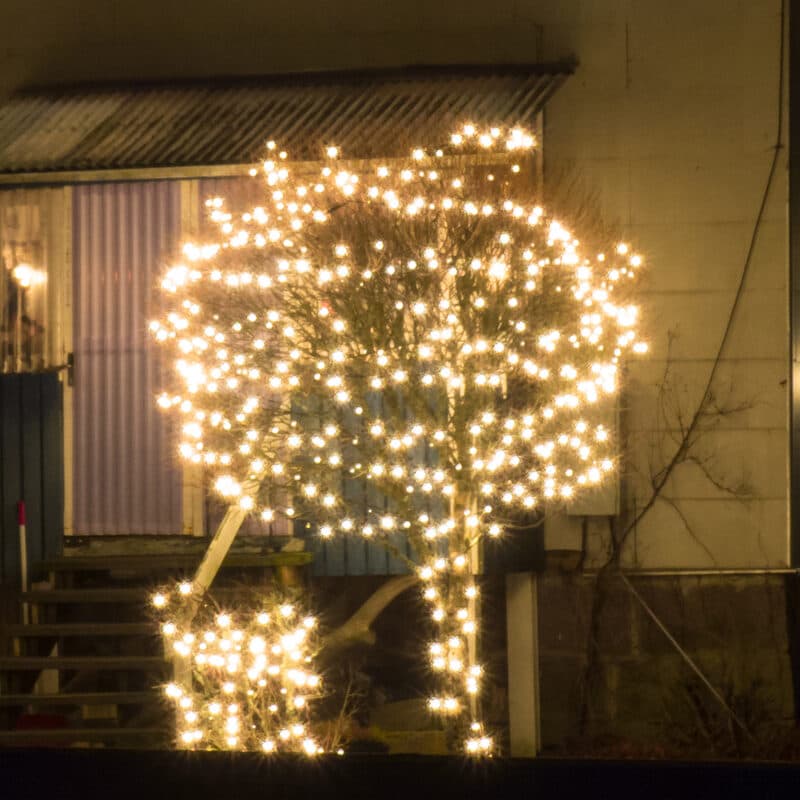
The buyer decides in summer. FirstService Residential's holiday checklist for associations, dated November 29, 2022, tells boards that if they need a contractor to put up lights, "it is recommended that you start taking bids in July or August," and quotes a manager: "These vendors get booked up, so you want to ensure you are on their schedule by September." The same page tells boards to put a holiday line item in the annual budget.
So the sales calendar runs a season ahead of the install calendar: proposals in July and August, when a manager is collecting bids for the board's fall meeting; signatures in September, when the lights get ordered; install dates in October and early November; removal in January.
What goes in a holiday lighting proposal
A board reads proposals side by side, so write yours to be compared. A management company's guide to vendor bids says boards should "review proposals from a handful of different vendors before settling on one," that "Providing the full scope of the project is a must," and that the total cost and the timeframe for the project are the two most important pieces of information. It also tells boards to confirm a vendor has "all the appropriate licenses, bonds, insurance, and certifications." Put each of those on the first page.
- The install date and the takedown date, as dates, not months. FirstService Residential's Texas page notes that some HOAs permit holiday decorations to be displayed starting 30 days before Christmas, requiring removal by mid-January; fit the rule.
- The scope, line by line: roofline in linear feet, each tree by height, wreaths and garland by the piece, the timer, the outlets.
- A price per season, offered for three seasons with each season's price written out, so the board approves a multi-year contract in one vote.
- Who owns the lights, who stores them, and who fixes a dark strand in December, how fast.
- Insurance and licenses, with the certificate holder wording the board wants.
- Three photos of similar work and two references the manager can call.
Lease the lights or sell them
The per season price depends on who owns the lights. In a lease you buy commercial grade lights, install them, take them down, store them and bring them back next year; the customer pays the same season price three years running. In a sale the customer buys the lights in year one at a markup and pays install and removal every year after. Businesses and boards lean to the lease: the price is flat, the storage is not theirs, and the vendor who owns the lights is the one who shows up to fix them. The arithmetic for both, with supplier prices and labor, is in how to price holiday light installation per linear foot.
Offer the lease as three packages: the roofline alone, the roofline plus the entrance trees, and the full property with wreaths and the sign. A board that would say no to the big number says yes to the middle one.
In MakeHay, those three packages sit side by side on one quote as good, better and best, with per linear foot lines for the roofline and per item lines for trees and wreaths; the manager approves and signs online from a link, and the quote shows when it was sent, viewed and approved (track your quotes). A deposit on the quote covers lights bought in September for an October install.
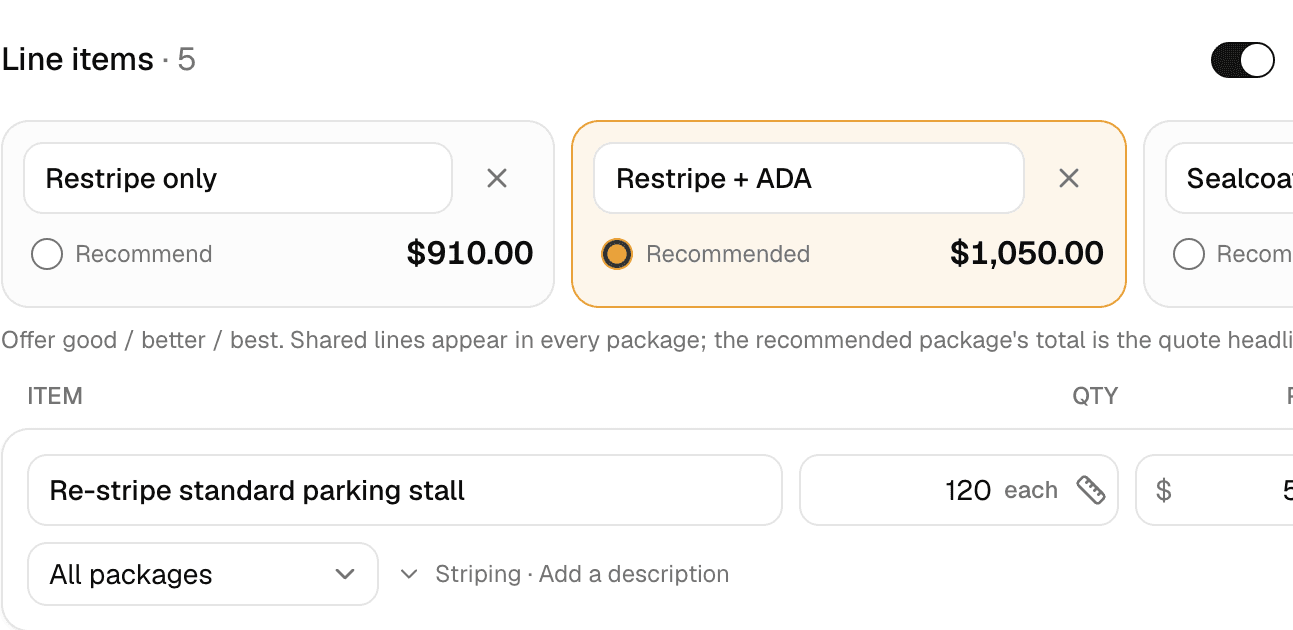
Three packages on one quote: the board picks one and signs from the link.
Holiday lighting insurance and the certificate the board asks for
No board lets a crew on its roof without proof of coverage. The US Small Business Administration's page on business insurance says general liability coverage "protects against financial loss as the result of bodily injury," property damage and lawsuit defense, and that the federal government requires every business with employees to carry workers' compensation, unemployment and disability insurance, with the laws varying by state.
The manager asks for the certificate. An insurer's page on the certificate of insurance describes it as "a document that shows proof of your business insurance and specific details about your policy," listing the certificate holder, the policy number, the insurer, the policy types, the start and expiration dates, the coverage limits and any additional insureds; "Certificates of insurance are often required and requested by clients, landlords, business partners and others," including to bid on a job and to satisfy contract requirements. Ask the manager for the certificate holder wording, the limits required and whether the association goes on as an additional insured, and have the agent send it the same day.
The board's side in one line, from FirstService Residential's Texas page: "Ensure vendors are licensed and insured to protect your community." The crew with the certificate ready in July is on the schedule in September.
Photos of last year's work and property manager referrals
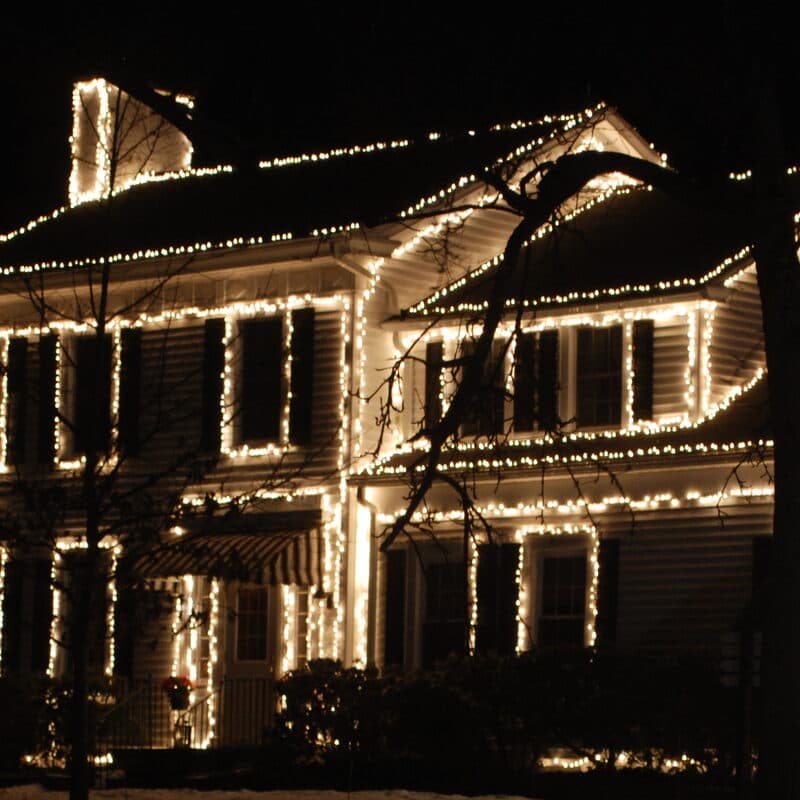
A board member cannot picture a roofline from a line item, so the proposal carries photos: the property in daylight before and at dusk after, the entrance sign lit, a wrapped tree from the sidewalk. Shoot every install at dusk from the street and name the file by property and year. Before and after photos that win contractor jobs covers the shots and the permission line to put in the contract.
The referral that matters is the manager's. The US Bureau of Labor Statistics handbook page for property, real estate and community association managers lists among their duties to "Contract for landscaping, maintenance, trash removal, and other services," to prepare budgets and financial reports, and to inspect the grounds; community association managers are usually hired by the association's volunteer board of directors, and the median annual wage was $69,990 in May 2025. One manager runs a portfolio, and the Texas page above tells boards to "Request recommendations from your management partner who has already vetted vendors." Do one entrance well and ask that manager for the list.
The safety pages to read before the first ladder goes up
Commercial buyers ask about safety because the roof is theirs and the sidewalk under the ladder is public. The US Consumer Product Safety Commission estimated 15,000 holiday decorating injuries seen in emergency departments in November and December 2012, with falls the most common incident at 34 percent. Its advice: check that outdoor lights are certified for outdoor use, plug them only into a GFCI protected receptacle or a portable GFCI, throw out damaged sets, make sure each extension cord is rated for its use, and "Heed the warning labels on ladders." Its holiday safety center adds: "Never string together more than three sets of incandescent lights and never overload electrical outlets."
For the ladders, US OSHA's construction rule, 29 CFR 1926.1053, says a portable ladder's side rails extend at least 3 feet above the upper landing surface, a leaning ladder is set with the foot about one quarter of the working length out from the top support, the user faces the ladder and carries no load that could cause a fall, the top step of a stepladder is not a step, and side rails are nonconductive where the ladder could contact energized equipment. One line in the proposal saying the crew works to that rule answers the safety question before it is asked.
Good to know: This is general information, not legal advice. Rules change; read the current text and ask your insurance agent, state licensing board or a lawyer before you rely on it.
The HOA holiday lighting contract: three seasons and a renewal date
The contract is the proposal with signatures: the seasons it covers, the price for each, the install and takedown windows, the response time for a dark strand, who owns and stores the lights, the certificate on file, and the date by which either side can decline the next season. A clause that rolls the contract forward unless the board says otherwise by a summer date means the account renews on the manager's calendar, not yours.
Keep the roofline feet, the bulb count, the crew hours and the dusk photo on the job; the June renewal is last year's numbers with a new date. In MakeHay the install and the removal are two visits on one job on the calendar, the manager's portal carries the contract to sign and the photos, and the request for next year's certificate holder wording goes out as a document request.
FAQ
When do businesses and HOAs book holiday lighting?
In summer. A management company's holiday checklist for associations tells boards to start taking bids in July or August and to be on a vendor's schedule by September, because vendors book up. Send the proposal before the board's budget meeting.
Does an HOA need board approval to hire a holiday lighting vendor?
Usually the board votes and the manager runs the contract. A vendor bid guide for associations says boards review proposals from a handful of vendors, want the full scope, the total cost and the timeframe, and check licenses, bonds and insurance; the governing documents may set rules for taking bids.
What insurance does a holiday light installer need for commercial work?
General liability, which the US Small Business Administration says protects against financial loss from bodily injury and property damage, plus workers' compensation and the other coverage the federal government requires of a business with employees, varying by state. The customer asks for a certificate of insurance naming it as the certificate holder, and often as an additional insured; the agent or insurer issues it.
Sources
- National Retail Federation: NRF Forecasts 2026 Holiday Sales Growth as Consumers Remain Resilient · Press release dated October 15, 2026: NRF is "predicting retail sales in November and December will grow 4.2% over 2025" to "total spending of $1.013 trillion"; "NRF defines the holiday season as Nov. 1 through Dec. 31." (accessed October 18, 2026)
- Foundation for Community Association Research, via the National Law Review: U.S. Surpasses 373,000 Community Associations as Housing Model Reaches New Heights · Press release dated April 1, 2026 on the 2025 Statistical Review: "373,000 community associations operate across the U.S."; "78.1 million Americans, nearly 1 in 4, live in community associations"; "Homeowners paid $124.2 billion in assessments". (accessed October 18, 2026)
- US Bureau of Labor Statistics, Occupational Outlook Handbook: Grounds Maintenance Workers · "The median hourly wage for grounds maintenance workers was $19.27 in May 2025"; "Some jobs are seasonal"; "grounds maintenance workers sometimes provide other services during the winter months, such as snow removal". (accessed October 18, 2026)
- US Bureau of Labor Statistics, Occupational Outlook Handbook: Property, Real Estate, and Community Association Managers · Duties include "Contract for landscaping, maintenance, trash removal, and other services", "Prepare budgets and financial reports", "Inspect building facilities, including the grounds and equipment"; community association managers are "Usually hired by a community association's volunteer board of directors"; "The median annual wage for property, real estate, and community association managers was $69,990 in May 2025." (accessed October 18, 2026)
- FirstService Residential: Preparing for the holidays in your HOA, a step-by-step guide · Article dated November 29, 2022: for a contractor to put up lights and decorations, "it is recommended that you start taking bids in July or August"; "These vendors get booked up, so you want to ensure you are on their schedule by September"; "The first thing to incorporate into your holiday planning checklist is a holiday line item in your annual budget"; "Verify with your insurance carrier that you have proper coverage before anyone starts climbing on ladders." (accessed October 18, 2026)
- FirstService Residential Texas: Handling the Holidays, Texas HOA Lighting Rules, Decor and More · "Ensure vendors are licensed and insured to protect your community"; "Request recommendations from your management partner who has already vetted vendors"; "Obtain multiple quotes to compare pricing and services"; "some HOAs permit holiday decorations to be displayed starting 30 days before Christmas, requiring removal by mid-January". (accessed October 18, 2026)
- Kuester Management Group: Reviewing Vendor Bids Within Your HOA · Boards should "review proposals from a handful of different vendors before settling on one"; "Providing the full scope of the project is a must"; the total cost and the timeframe for the project are called the two most important pieces of information; the vendor should have "all the appropriate licenses, bonds, insurance, and certifications"; boards are "bound by your governing documents/CC&Rs" in taking bids. (accessed October 18, 2026)
- US Small Business Administration: Launch your business, pick the type of business insurance you need · The old Get business insurance address forwards to this section. General liability insurance: "This coverage protects against financial loss as the result of bodily injury", property damage and lawsuit defense; "The federal government requires every business with employees to have" workers' compensation, unemployment and disability insurance; "Laws requiring insurance vary by state." (accessed October 18, 2026)
- NEXT Insurance: Certificate of Insurance (COI) · A certificate of insurance "is a document that shows proof of your business insurance and specific details about your policy"; it typically lists the certificate holder's name, the policy number, the insurer's name, the policy types, the coverage start and expiration dates, the coverage limits and additional insureds; "Certificates of insurance are often required and requested by clients, landlords, business partners and others", including to bid on a job and to satisfy contract requirements; undated page. (accessed October 18, 2026)
- US CPSC: CPSC Estimates More Than 15,000 Holiday Decorating Injuries During November and December · Release dated December 5, 2013: an estimated 15,000 injuries involving holiday decorating seen in emergency departments in November and December 2012; falls 34 percent; outdoor lights should be "certified for outdoor use" and plugged only into a GFCI protected receptacle or a portable GFCI; "Throw out damaged sets"; "Make sure each extension cord is rated for the intended use and is in good condition"; "Heed the warning labels on ladders." (accessed October 18, 2026)
- US CPSC: Holiday Safety Education Center · Holiday decorating tips: "Never string together more than three sets of incandescent lights and never overload electrical outlets"; undated tips page. (accessed October 18, 2026)
- OSHA: 29 CFR 1926.1053, Ladders · (b)(1): portable ladder side rails "shall extend at least 3 feet (.9 m) above the upper landing surface"; (b)(5)(i): the horizontal distance from the top support to the foot is "approximately one-quarter of the working length of the ladder"; (b)(12): nonconductive siderails where the employee or the ladder could contact exposed energized electrical equipment; (b)(13): "The top or top step of a stepladder shall not be used as a step"; (b)(20): "When ascending or descending a ladder, the user shall face the ladder"; (b)(22): "An employee shall not carry any object or load that could cause the employee to lose balance and fall." (accessed October 18, 2026)