How to Get Line Striping Contracts That Repeat Every Year
How to get line striping contracts that come back every year: who buys restriping, the restripe cycle, a per-stall proposal with a date, ADA as the opener.
The MakeHay team · · 11 min read
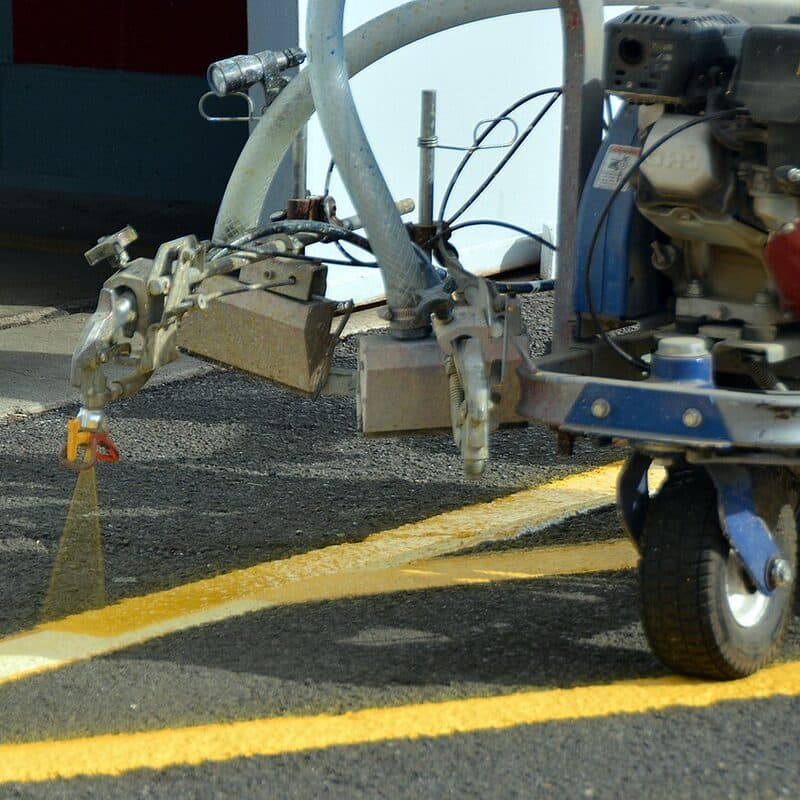
Here is how to get line striping contracts that come back every year instead of once. Paint wears off on a schedule, federal rules say what the next coat has to include, and the people who own lots would rather sign one proposal than shop the job every spring. Give them a per-stall price, a yearly date and a reason to call now, and the same lot pays again next season.
Who buys repeat striping: the parking lot striping customers to call
A homeowner stripes nothing. The people who buy striping own or manage pavement the public parks on, and most of them buy it again on a cycle whether or not you are the one holding the gun.
- Property managers: one person holds a dozen lots with budgets set a year ahead. Win one lot and ask for the list.
- HOAs and condo boards: guest parking, fire lanes and the clubhouse lot, approved at a board meeting from a written proposal.
- Retail and strip centers: the owner wants the lot to look open, and the leases say the common area is maintained.
- Churches and schools: big lots, empty on weekdays or in summer, so the calendar is the selling point.
- Medical offices: ADA.gov says hospital outpatient lots carry a higher accessible share than ordinary lots.
Each of these buyers has a reason to restripe that has nothing to do with you: faded lines, a complaint, a fresh sealcoat, a new tenant. Be the name on file when that reason arrives, with a proposal that already carries next year's date.
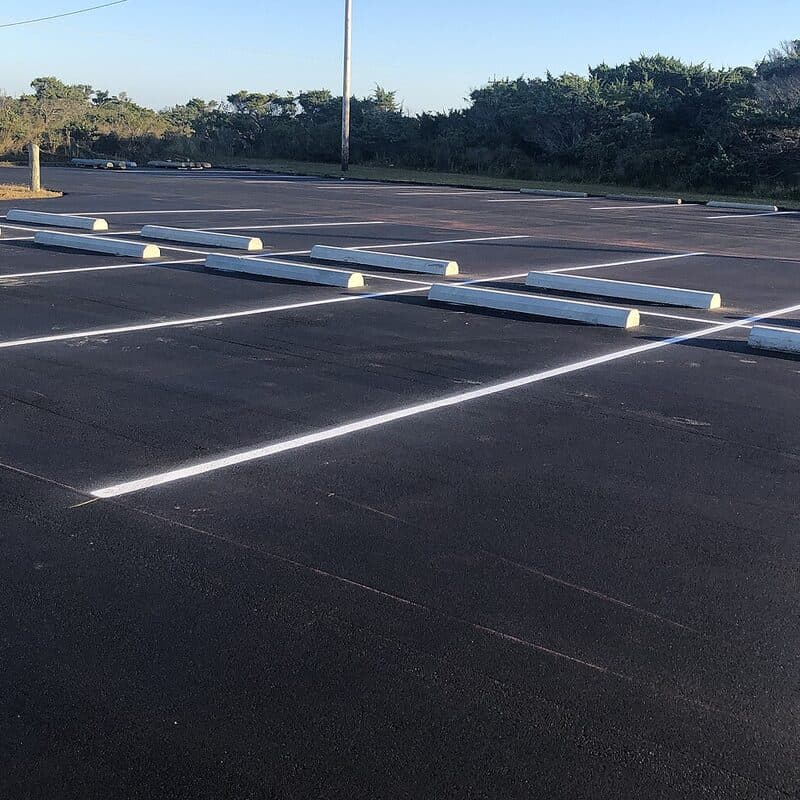
How often to restripe a parking lot, and why the work comes back
The cycle is the whole business model. A 2021 study for the Louisiana DOTD found that 4 inch wide standard waterborne paints on asphalt "exhibited service life up to four years depending on the line color," and that most Louisiana districts "restripe their roadways using waterborne paints every other year." A parking lot adds tires turning in the stall, plow blades and salt, so the lines go sooner than a highway lane's, and the trigger is usually an event rather than paint wearing through.
- A sealcoat or an overlay covers every line, and the manufacturer FAQ says sealcoating "is recommended every 3 years to provide adequate pavement protection." Every sealcoat is a full restripe.
- Crack sealing across the stalls leaves black bands through the lines until the lot is repainted.
- Faded lines that fail at dusk or in rain, when the tenant complains.
- A layout change: a new tenant, a drive-through, more accessible spaces, a fire lane the marshal wants painted.
The paint sets the floor on quality, and the state specs are public. Ohio DOT applies its Type 1 fast-dry water-based traffic paint "when the pavement and air temperature are 50 °F and above," at 1.25 gallons per 100 square feet.
ADA parking restriping: the reason the phone rings
The strongest opener in this trade is a federal rule, and it is short. The Department of Justice's compliance brief on restriping says that when a business restripes a parking lot, "it must provide accessible parking spaces as required by the 2010 ADA Standards for Accessible Design." It also says that because restriping is relatively inexpensive, it is readily achievable in most cases.
Most owners do not know the table. ADA.gov gives it: 1 accessible space for a lot of 1 to 25 spaces, 2 for 26 to 50, 3 for 51 to 75, 4 for 76 to 100, 5 for 101 to 150, counted separately for each lot or garage. One of every six accessible spaces, and always at least one, must be van accessible. A car space is at least 96 inches wide with a 60 inch access aisle; a van space is 132 inches with a 60 inch aisle, or 96 inches with a 96 inch aisle.
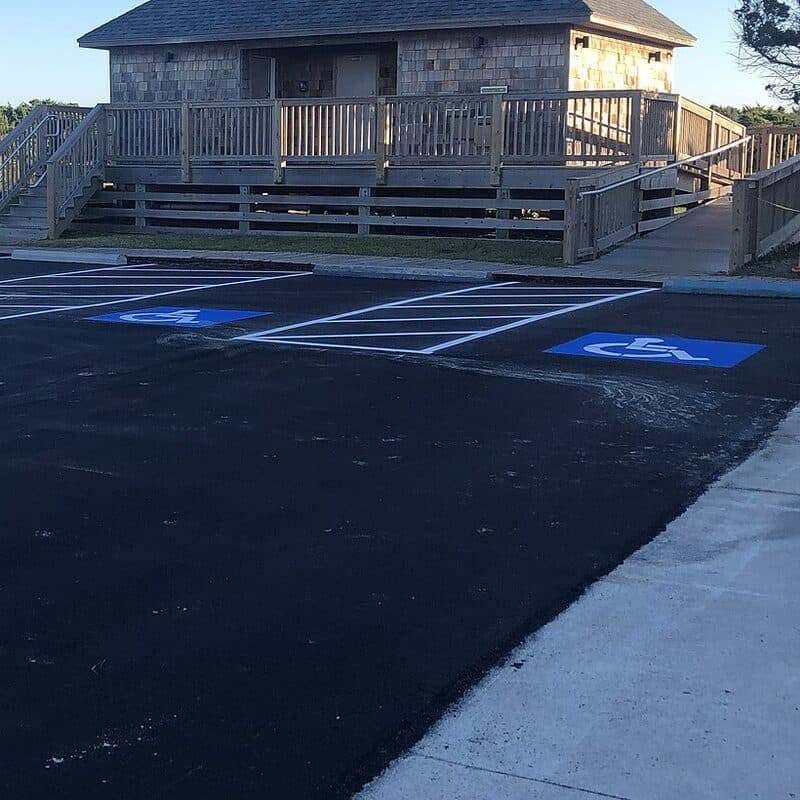
That table is your walk-around. Count the stalls and the accessible ones, check for a van space and a marked aisle, and you can tell a property manager in one sentence whether the lot meets the count; the ADA striping checklist adds slopes and signs. Lead the proposal with it: "Your lot has 84 spaces and 2 accessible spaces; the standard calls for 4, one of them van accessible. The restripe below brings it to the count."
Good to know: This is general information, not legal advice. Rules change; read the current ADA Standards and the local code, and ask a lawyer before you promise compliance.
How to find parking lots that need striping before they call
- Step 1: Drive the route you already run and photograph every lot with faded lines, a missing van space or no access aisle. One photo of the worst stall is the whole pitch.
- Step 2: Pull the lot up on satellite imagery and count the stalls and the accessible ones; 80 stalls and one blue stall is a call worth making.
- Step 3: Find the decision maker from the sign on the building, the leasing sign, or the county property record.
- Step 4: Send one page: the photo, the stall count, what the ADA table calls for, a per-stall price and a date.
- Step 5: Log every lot, even the ones that said no. A no in April is a yes after the sealcoat.
Counting from above is faster than walking. The free satellite measurement tool traces a lot from the address for square feet, and the stalls show in the imagery, so you can count and price before you drive out. Pricing a line striping job turns the count into a per-stall number.
The line striping proposal: a per-stall price and a yearly date
A one-time quote asks the owner to decide once; a proposal with a date asks the owner to decide never again. Price per stall, with the extras as their own lines, so the next lot prices itself. For a published reference, SealMaster's striping cost FAQ lists standard stalls at $4 to $5 each, accessible stalls at $25 to $30 each and mobilization at $250 to $350, and says to add 20 to 30 percent for a new layout rather than a restripe. The layout line is the one to sell: "The layout is this year's job. Every year after is a restripe at the per-stall price, and the price holds while the layout holds."
- Line 1, the count: stalls, accessible stalls, arrows, crosswalks, fire lane and curb feet, each with a unit price.
- Line 2, the date: the month the lot gets repainted every year, chosen around the owner's slow season and the paint's temperature rule, with a reminder a month before.
- Line 3, the bundle: the sealcoat year and the crack fill year on the same page, so the owner sees the whole cycle.
In MakeHay, that proposal is a quote with line items in your own units, per stall, per each and per linear foot, and the customer approves and signs it from a link with no login. Once approved, the lot becomes a job on recurring service with the restripe month set, so next year's visit is already on the calendar and the invoice follows the visit. The quote below carries striping, sealcoating and crack filling on one page.
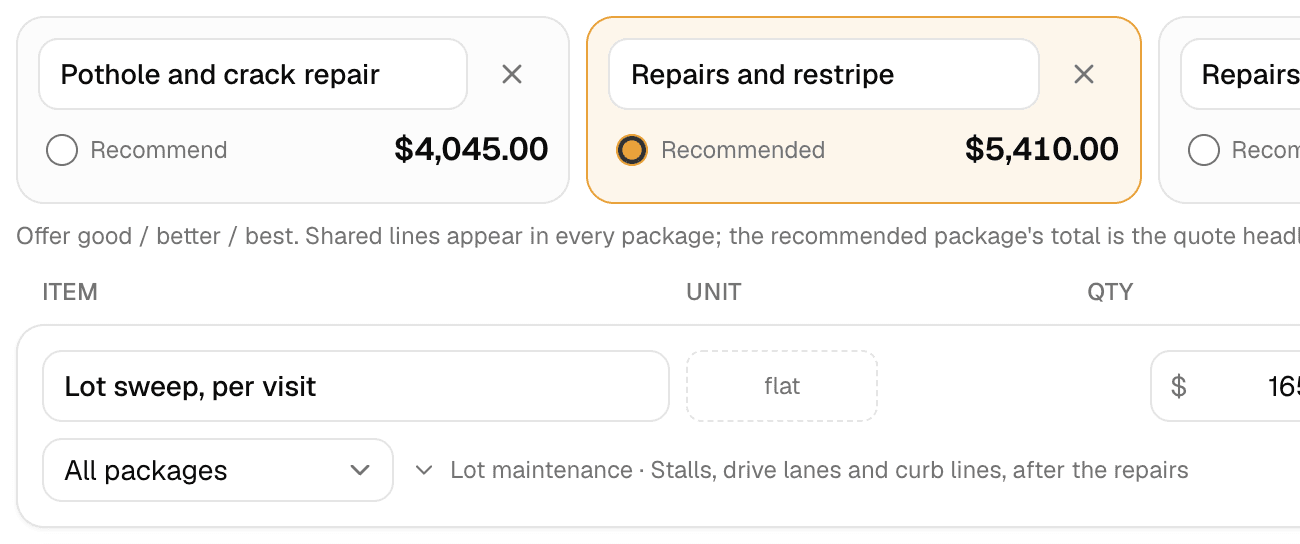
Striping, sealcoat and crack fill on one quote, each in its own unit.
Bundle the paint with sealcoating and crack filling
A striper who only stripes gets called after someone else sealcoated the lot. A striper who sells the sealcoat gets called first, because the sealcoat is the event that forces the paint. With the sealcoat about every three years, a lot you stripe every spring gets one big year in three and two restripe years from one contractor. The parking lot maintenance schedule lays out the year; pricing sealcoating per square foot and pricing crack sealing per linear foot give the other two numbers.
Federal Highway's pavement preservation page makes the owner's case: treatments done "when the pavement condition is still satisfactory can impede deterioration, extend service life, and improve functionality in a cost-effective manner." An owner who waits for potholes buys an overlay; an owner on a cycle buys sealcoat and paint from you.
The reminder before the season, and one quote per lot
The repeat is not automatic; it is reminded. Four to six weeks before the restripe month, the owner gets a short email: the lot, the date, last year's per-stall price, a photo of the lines as they look now, and one question, "Same week as last year?" Since the paint spec wants pavement and air at 50 °F or warmer, say "the week of" and tell the owner when a cold snap moves it.
Keep one quote per lot: each lot has its own count and its own photo, and when the manager changes jobs the lot stays with the owner. Photos do the renewal work, this year's fade beside last year's fresh lines. Google's Business Profile help says an exterior photo "helps customers recognize your business when they visit" and that "the image should represent reality," so the same lot photos belong on the profile, unfiltered.
Reviews from the lots you already stripe
Commercial buyers check reviews too, and Google's ranking help says "More reviews and positive ratings can help your business's local ranking." Google's help says you can ask customers to visit a link or scan a code, and that offering free or discounted goods or services for a review is prohibited. The FTC's endorsement guide says "Only asking for reviews from customers who you think are more likely to be happy with your product would be misleading," and "You can't condition an incentive" such as a discount on a review being positive; since August 14, 2024, the FTC's fake-reviews rule lets it seek civil penalties against knowing violators.
So ask everyone, after every job, with the same link, and reply to every review including the bad one; getting Google reviews as a contractor covers the wording. In MakeHay the ask goes out by email on a schedule you set, from a template you edit, with an unsubscribe link at the bottom (ask customers for reviews).
FAQ
How much does it cost to restripe a parking lot per stall?
SealMaster's striping FAQ lists standard stalls at $4 to $5 each, accessible stalls at $25 to $30 each and mobilization at $250 to $350, with 20 to 30 percent added for a new layout. Your paint, labor and drive time set the real number.
Does restriping a parking lot trigger ADA requirements?
Yes. The Department of Justice compliance brief says a business that restripes must provide accessible parking spaces as required by the 2010 ADA Standards, and that because restriping is relatively inexpensive, it is readily achievable in most cases. The brief calls itself informal guidance, so let the owner's lawyer confirm.
Do line striping reviews matter for commercial work?
Property managers search the same way everyone does, and Google says more reviews and positive ratings can help local ranking. Ask every customer with the same link, never only the happy ones, and never offer a discount for a positive review; Google prohibits incentives and the FTC can seek penalties for sentiment-based ones.
When is the best time of year to stripe a parking lot?
When the pavement and the air are warm enough for the paint. Ohio DOT applies its standard water-based traffic paint at 50 °F and above for both, so the season runs from the first warm weeks of spring through fall in most of the country.
Sources
- Accessible Parking Spaces (ADA.gov) · Minimum accessible spaces by lot size under the 2010 Standards: 1 for 1 to 25 total spaces, 2 for 26 to 50, 3 for 51 to 75, 4 for 76 to 100, 5 for 101 to 150, 6 for 151 to 200, 7 for 201 to 300, counted separately for each lot or garage; at least one of every six accessible spaces van accessible; car space at least 96 inches wide with a 60 inch access aisle; van space 132 inches with a 60 inch aisle or 96 inches with a 96 inch aisle; sign at least 60 inches above the ground to its bottom; hospital outpatient facilities 10 percent accessible; guidance described as informal and not binding; no date on the page. (accessed October 18, 2026)
- ADA Compliance Brief: Restriping Parking Spaces (ADA.gov, US Department of Justice) · When a business or state or local government restripes a parking lot, "it must provide accessible parking spaces as required by the 2010 ADA Standards for Accessible Design"; businesses serving the public have a continuing duty to remove barriers in existing lots where readily achievable, and "Because restriping is relatively inexpensive, it is readily achievable in most cases"; "One of six (or fraction of six) accessible parking spaces, but always at least one, must be van accessible"; accessible spaces on the shortest accessible route to the entrance; the brief is informal technical assistance; issued December 1, 2015, updated February 28, 2020. (accessed October 18, 2026)
- Maintenance and Restriping Strategies for Pavement Markings on Asphalt Pavements in Louisiana (Tran-SET final report, abstract on ROSA P, US DOT) · Abstract of the August 1, 2021 final report for the Louisiana DOTD: "In Louisiana, most districts restripe their roadways using waterborne paints every other year"; "4-inch-wide standard paints exhibited service life up to four years depending on the line color," traffic and initial retroreflectivity, "while 4-inch wide high-build paints had a service life of at least three years"; the study concludes LaDOTD could restripe every three years instead of every two. (accessed October 18, 2026)
- 642 Traffic Paint, Construction Manual of Procedures (Ohio Department of Transportation) · Type 1 and Type 1A are both "fast dry, water-based paint"; "Traffic Paint Type 1 shall be applied when the pavement and air temperature are 50 °F and above"; Type 1A between 35 °F and 50 °F; Type 1 applied at 22 gallons per mile of 4 inch solid line or "1.25 gallons per 100 square feet"; glass beads for Type 1 "at the rate of 15 pounds per 100 square feet"; coning required where the marking is not track free in 2 minutes or less. (accessed October 18, 2026)
- How Much Does it Cost to Stripe a Parking Lot? (SealMaster FAQ) · Manufacturer's reference figures: "Number of parking stalls: ($4-$5 each)"; handicapped stalls $25 to $30 each; directional arrows $15 to $20 each; word stencils $3 to $5 per letter; pedestrian crosswalks $50 to $75 each; fire lanes $40 to $75; curb painting $1 per linear foot; mobilization $250 to $350; "New layout or re-stripe: (add 20 to 30 percent to job cost for new layout)"; a 90 degree layout costs more because of longer lines. (accessed October 18, 2026)
- How Often Should you Sealcoat a Parking Lot or Driveway? (SealMaster FAQ) · "Typically, sealcoating is recommended every 3 years to provide adequate pavement protection"; timing depends on sealer quality, traffic volume and climate; heavy-traffic lots may need a third coat. (accessed October 18, 2026)
- Pavement Preservation (Federal Highway Administration) · Pavement preservation is work "planned and performed to improve or sustain the condition of the transportation facility in a state of good repair"; quality preservation treatments built "when the pavement condition is still satisfactory can impede deterioration, extend service life, and improve functionality in a cost-effective manner"; page updated October 5, 2023. (accessed October 18, 2026)
- Get reviews on Google (Google Business Profile Help) · You can ask customers to visit a Google link or scan a QR code to leave a review; customers must be signed in to a Google Account; offering "free or discounted goods or services" in exchange for reviews is "strictly prohibited"; "Negative reviews aren't necessarily a sign of poor business practices"; reply promptly and avoid using the response to offer deals. (accessed October 18, 2026)
- How to improve your local ranking on Google (Google Business Profile Help) · Local results are mainly based on relevance, distance and popularity (prominence); "More reviews and positive ratings can help your business's local ranking"; "Businesses with complete and accurate info are more likely to show up in local search results"; "There's no way to request or pay for a better local ranking on Google." (accessed October 18, 2026)
- Business Profile photo and video guidelines (Google Business Profile Help) · "When you add an exterior photo, it helps customers recognize your business when they visit"; photos should be in focus, well lit and free of significant alterations or heavy filters, "the image should represent reality"; JPG or PNG, 10 KB to 5 MB, recommended 720 by 720 pixels; photos appear only after the profile is verified. (accessed October 18, 2026)
- FTC's Endorsement Guides: What People Are Asking (Federal Trade Commission business guidance) · A business can invite all of its customers to post honest reviews, positive or negative; "Only asking for reviews from customers who you think are more likely to be happy with your product would be misleading"; "You can't condition an incentive, for example a discount, on a review being positive"; asking customers to change or delete negative reviews could mislead readers. (accessed October 18, 2026)
- Federal Trade Commission Announces Final Rule Banning Fake Reviews and Testimonials (FTC press release, August 14, 2024) · The rule prohibits creating, selling or buying fake reviews, "providing compensation or other incentives conditioned on the writing of consumer reviews expressing a particular sentiment," undisclosed insider reviews and suppressing reviews by unfounded legal threats or intimidation; it lets the FTC "seek civil penalties against knowing violators"; announced August 14, 2024, effective 60 days after Federal Register publication. (accessed October 18, 2026)