Parking Lot Maintenance Schedule: A Year-Round Plan by Month
A parking lot maintenance schedule for the whole year: sweeping, crack sealing, sealcoating, restriping, patching and snow, with the interval behind each.
The MakeHay team · · 10 min read
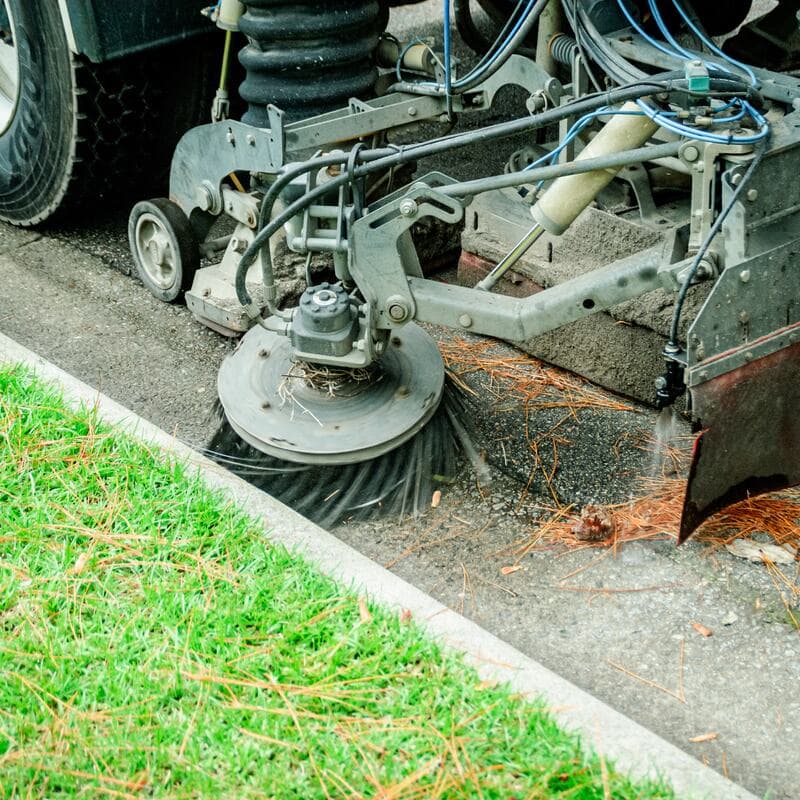
A parking lot maintenance schedule puts each task on its own interval: sweeping at least monthly, catch basins cleaned before the sump fills, cracks sealed in spring or fall, a sealcoat about every 3 years, a restripe after every sealcoat, a patch the month a pothole appears, and plowing from the first 1-inch snow to the last. Here is the year by month, the source behind each interval, and the post that prices each task.
What skipping maintenance costs the pavement
Skipping the cheap treatments brings the expensive ones forward. The Federal Highway Administration's pavement preservation page (a US federal source) says treatments applied while the pavement is still satisfactory slow deterioration and extend service life cost-effectively; its mantra is "keeping good roads good." A lot is a small road: sweeping, crack sealing and a sealcoat each cost a fraction of the patching that follows when they are skipped.
Monthly: sweeping, litter, drainage and a walk-through
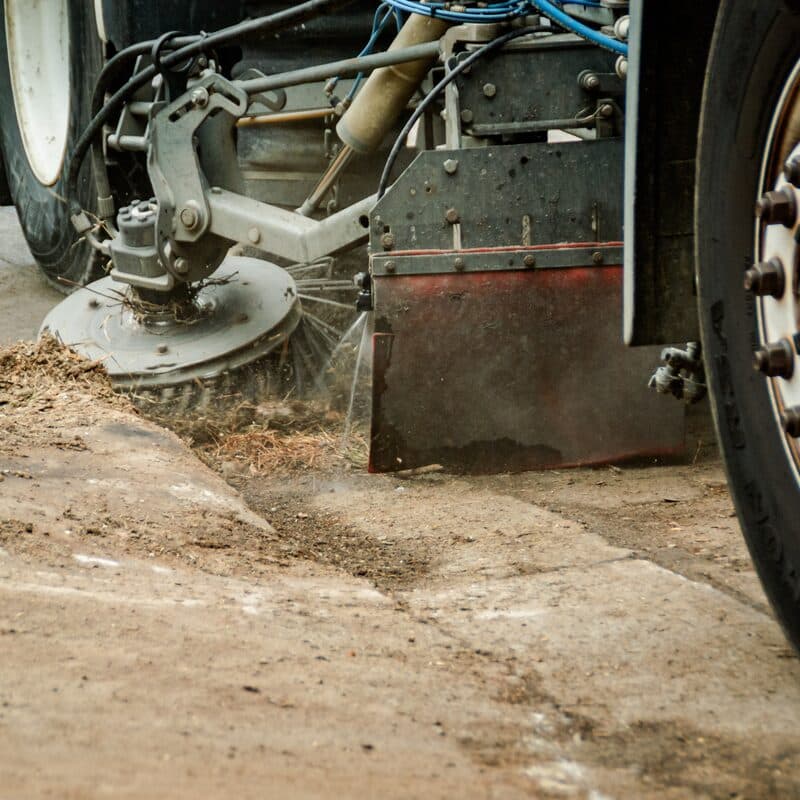
Sweep at least once a month, and weekly or every two weeks where the lot is busy. The floor comes from Arlington County, Virginia's stormwater credit for private lots (a US county program), which requires one pass over the entire lot four times a calendar year, March through November, by a regenerative-air or vacuum-assisted sweeper. The optimum comes from the Stormwater Center's parking lot cleaning page, which finds weekly or every two weeks the most effective interval and daily little better; in cold climates it calls early spring right after snowmelt the critical sweep, to capture the winter sand and salt.
The same visit is the walk-through: empty the receptacles, check every inlet grate, and note new cracks, potholes, faded lines and dead lights. Log the date, square footage, sweeper type and debris collected; Arlington's credit asks for those four on the invoice, with before and after photos.
The free satellite measurement tool traces the lot's area and perimeter and counts the stalls; in MakeHay the saved measurement fills the per square foot and per stall lines and updates if the trace is edited.
Catch basin cleaning schedule: before the sump fills
Clean each catch basin before its sump is 60 percent full, usually once or twice a year. The Massachusetts Department of Environmental Protection's catch basin maintenance factsheet (a US state source) sets once or twice a year as the minimum and cites a 1985 Pitt study finding a sump captures sediment up to about 60 percent of its volume and reaches steady state past that. The Stormwater Center's catch basin page, a stormwater reference site, gives the same two numbers and adds an annual inspection as the minimum, since flow through a full basin scours and resuspends what it trapped. Measure the sediment depth with a rod on the spring sweep. The removed material may be barred from a standard landfill without testing, so disposal is its own quote line.
Spring and fall: crack sealing
Seal cracks in late fall or early spring. A City of Lawrence, Kansas public works memo (a US city source, January 2005) says the work is best completed then, when cool to moderate temperatures have contracted the pavement and opened the cracks; cracks opened more than 1/4 to 1/2 inch are candidates, wider than 1/2 inch may need a filler first, and sealing keeps water out of the base, which extends pavement life.
The price per linear foot is worked in How to Price Crack Sealing Per Linear Foot.
How often to sealcoat a parking lot
Every 3 years is the manufacturer's baseline, and harsh winters shorten it. SealMaster's FAQ on frequency says sealcoating is typically recommended every 3 years, that regions with harsh winter weather see faster wear, and that freeze and thaw cycles, snow plowing and high traffic shorten sealer life. New asphalt comes first: SealMaster's sealcoating FAQ says it should cure a minimum of 30 to 60 days.
The weather window is in Sealcoating Temperature Requirements, Rain and Cure Time; the price per square foot in How to Price Sealcoating Per Square Foot and the gallons in How Much Sealer Do I Need?.
How often to restripe a parking lot, and the ADA trigger
Restripe after every sealcoat, because the sealer covers the lines. Under US federal ADA rules the restripe is also a trigger: ADA.gov's compliance brief on restriping parking spaces (last updated February 28, 2020) says a business or government that restripes a lot must provide accessible spaces as the 2010 ADA Standards require, since restriping is inexpensive and readily achievable; one of every six accessible spaces (always at least one) must be van accessible, and a lot of 101 to 150 spaces needs 5 accessible, 1 of them van accessible.
The aisles and signs are in the ADA parking striping checklist; the price per stall is in How to Price a Line Striping Job.
Good to know: This is general information, not legal advice. Statutes and rules change; read the current text and ask your state licensing board or a lawyer before you rely on it.
Potholes and patching: when to call
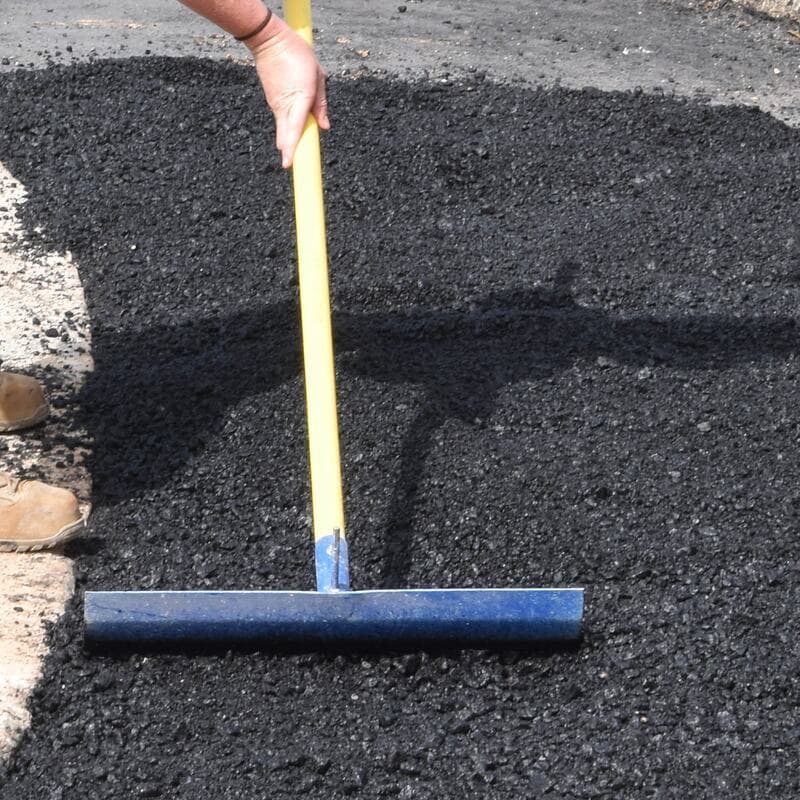
Patch a pothole the month it appears, before water gets under the mat and softens the base. The throw-and-roll versus cut-out choice and the price per square foot and per ton are worked in How to Price Asphalt Patching.
Fire lanes, signs and lighting: the annual check
Once a year, walk the fire lanes, signs and lights with the local fire code open; the fire marshal sets the lane width, curb color and lettering, and they differ by town. The fire lane section of the ADA parking striping checklist covers what to look for.
Winter: salt, plowing and the trigger
The snow season runs from the normal first 1-inch snowfall to the normal last one. The National Weather Service's Chicago snow climatology page (a US federal source, 1991 to 2020 normals) puts O'Hare's first snowfall of 1 inch or more at December 7 and the last at March 20. The method for your own station is in How to Price a Seasonal Snow Plowing Contract.
The trigger depth is in Snow Plow Trigger Depth: 1 Inch vs 2 Inch, the salt per application in How Much Salt to Put on a Parking Lot, and the minutes per push in How Long Does It Take to Plow a Parking Lot?.
In MakeHay, every scheduled visit carries the National Weather Service forecast for the lot's coordinates (US addresses); the suggested lot maintenance rules are Sweeping at max rain 50 percent and Sealcoating at max rain 40 percent and min temp 50°F, checked the day after.
The parking lot maintenance schedule on one page
| Month | Task | Interval | Priced in |
|---|---|---|---|
| January | Plow and salt; walk-through | Each event at the trigger | Trigger, salt |
| February | Plow and salt | Each event at the trigger | Plow time |
| March | Sweep right after snowmelt | Once the lot is bare | Lot maintenance |
| April | Sweep; inspect catch basins; patch potholes | Monthly; yearly | Patching |
| May | Sweep; spring crack seal | Monthly; spring or fall | Crack sealing |
| June | Sweep; sealcoat in year 3 | Monthly; every 3 years | Sealcoating, gallons |
| July | Sweep; restripe with the ADA count | Monthly; after every sealcoat | Striping |
| August | Sweep; fire lane, sign and light check | Monthly; yearly | ADA checklist |
| September | Sweep; clean full catch basins | Monthly; once or twice a year | This post |
| October | Sweep (leaf fall); fall crack seal | Weekly or every two weeks; spring or fall | Crack sealing |
| November | Final sweep; stake the lot | Once | Seasonal contract |
| December | Plow and salt from the first 1-inch snow | Each event at the trigger | Seasonal contract |
Worked example: A 40,000 sq ft lot with 120 stalls: the quantities one year of this schedule produces
- Sweeps: one a month from April through November is 8, plus the snowmelt sweep in March, so 9 sweeps.
- Catch basins: assume 4 inlets, each cleaned once or twice a year, so 4 to 8 cleanings plus disposal.
- Crack sealing: linear feet from the walk-through; assume 600 linear ft in the fall.
- Sealcoating, year 3 only: coverage = area × coats = 40,000 × 2 = 80,000 sq ft.
- Restripe: 120 stalls; the ADA table for 101 to 150 spaces requires 5 accessible and 1 van accessible.
- Plowing on O'Hare's normals: pushes = days with 1 inch or more + days with 3 inches or more = 11.4 + 3.9 = 15.3, so 15 at a 1-inch trigger; salt on at least those 11.4 days.
Result: 9 sweeps, 4 to 8 catch basin cleanings, 600 linear ft of crack, 80,000 sq ft of sealcoat coverage every third year, 120 stalls with 5 accessible, and 15 plow pushes, each priced by its own post.
Parking lot maintenance contract: one repeating agreement
A maintenance agreement bundles the monthly work as one repeating visit, billed per visit, and the seasonal work as separate jobs quoted when the walk-through finds them: one flat monthly line and a short list of dated projects.
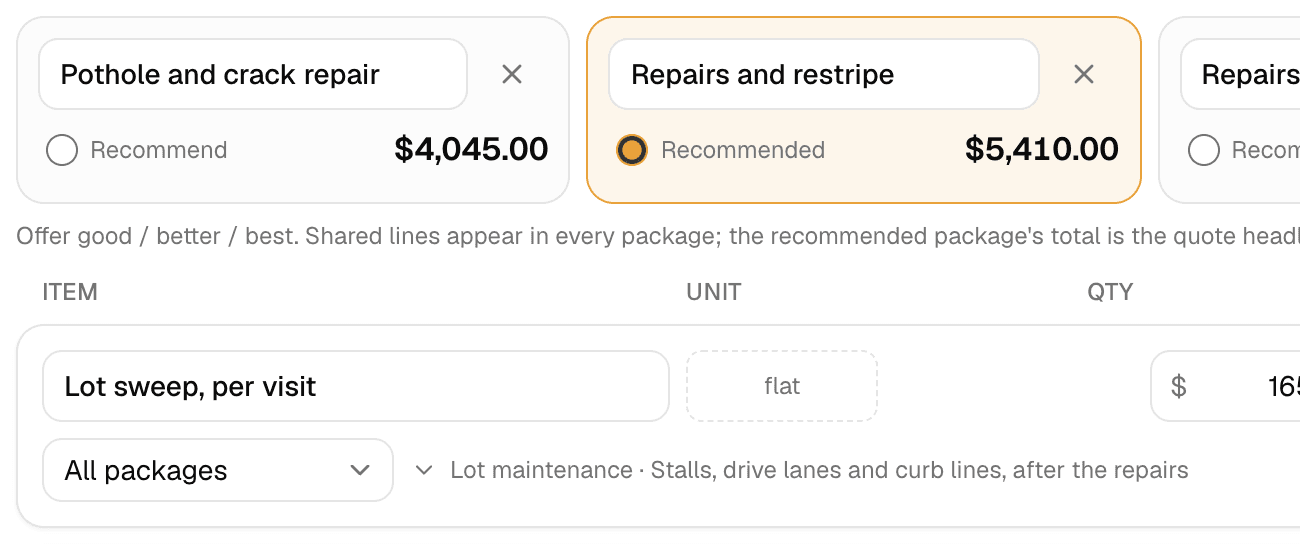
In MakeHay, the parking lot maintenance starter list carries Lot sweep, per visit as a flat price, Sidewalk and curb blow-off per linear foot, Sealcoat, two coats per square foot and Restripe, per stall as each. A repeating job with Bill after each visit invoices each sweep, and autopay charges the saved card or bank account. Seasonal work is a separate job billed in stages: a deposit, stage invoices, the final from the quote. Reports show Work won by service.
Parking lot maintenance checklist
- Monthly: sweep (weekly or every two weeks on a busy lot), clear the inlets, walk for cracks, potholes and faded lines.
- March: sweep as soon as the lot is bare.
- Spring: inspect every catch basin; clean any sump past 60 percent.
- Late fall and early spring: seal cracks 1/4 inch and wider.
- Every 3 years, sooner in harsh winters: sealcoat, then restripe with the ADA count.
- Any month: patch a pothole the month it is found.
- Yearly: fire lanes, signs and lighting against the local code.
- Before the first 1-inch snowfall: stakes in, trigger and salt rate in the agreement.
FAQ
How often should a parking lot be swept?
At least monthly, and weekly or every two weeks where traffic and debris are heavy. Arlington County's stormwater credit requires four passes a year, March through November; the Stormwater Center finds weekly or biweekly the most effective interval. In a cold climate, never skip the sweep after snowmelt.
Does a lot in a snow belt need sealcoating sooner than every 3 years?
Often, yes. SealMaster's FAQ gives every 3 years as the typical recommendation, then says regions with harsh winter weather see faster wear and names freeze and thaw cycles and snow plowing among the factors that cut sealer life. Move the year up when the drive lanes show bare asphalt.
When should cracks be sealed?
In late fall or early spring, when cool to moderate temperatures have contracted the pavement and opened the cracks, the timing the City of Lawrence, Kansas gives for its program. Seal cracks opened more than 1/4 to 1/2 inch; wider than 1/2 inch may need a filler first.
What should a lot maintenance contract include?
A fixed sweep day and what each visit covers, the walk-through report, the season for crack sealing, sealcoating and restriping, the pothole response, the snow trigger and salt rate, and how each item bills: the sweep per visit, projects by deposit and stages.
Sources
- Pavement Preservation, Federal Highway Administration · Preservation is work that is planned and performed to improve or sustain the condition of the transportation facility in a state of good repair; treatments applied while the pavement is still satisfactory slow deterioration, extend service life and improve functionality in a cost-effective manner; "keeping good roads good" is the mantra of pavement preservation. (accessed October 13, 2026)
- Multi-Family and Non-Residential: Parking Lot/Private Street Sweeping, Arlington County, Virginia · Make 1 pass over the entire parking lot or private street four times per calendar year, during the months of March through November; the contractor must use a regenerative-air or vacuum-assisted sweeper; debris collected must be disposed of according to local and State regulations; invoices show the dates of service, the square footage swept, the type of sweeper used and the amount of debris collected. (accessed October 13, 2026)
- Street Sweeping and Parking Lot Cleaning for Water Quality, Stormwater Center · Sweeping on a weekly or bi-weekly (every two weeks) schedule appears to be the most effective interval; sweeping more frequently, such as daily, may not remove significantly more pollutants to justify the added cost; in colder climates a critical time for sweeping is the early spring immediately following snowmelt, to capture winter sand and salt deposits; sweepings go to a sanitary landfill after dewatering. (accessed October 13, 2026)
- Catch Basin Maintenance, BMP Factsheet, Massachusetts Department of Environmental Protection · At a minimum, catch basins should be cleaned once or twice per year; one study (Pitt, 1985) concluded that catch basins can capture sediments up to approximately 60 percent of the sump volume, and when sediment fills greater than 60 percent of their volume catch basins reach steady state; cleanings from storm water only systems may go to any landfill permitted to accept solid waste, contaminated cleanings must be evaluated under the hazardous waste regulations. (accessed October 13, 2026)
- Catch Basin Cleaning: Schedules, Costs, Effectiveness, Stormwater Center · A working reference site without a named author: as a general baseline, most catch basins should be cleaned once or twice per year; at a minimum, inspect all catch basins annually and clean them before the sump is 60 percent full; studies have shown that once a sump is more than 60 percent full its ability to capture new sediment diminishes sharply; the force of stormwater flowing through the full basin will scour and resuspend the pollutants that were previously trapped; the removed material cannot simply be dumped on open land and may be prohibited from standard landfills without prior testing and approval. (accessed October 13, 2026)
- Memorandum: Crack Sealing, City of Lawrence, Kansas Public Works · Memo of January 27, 2005: crack sealing is best completed in late fall and early spring when temperatures are cool to moderate as pavements contract and cracks are opening up; generally, cracks which have opened up more than 1/4 to 1/2 inch are candidates for sealing; cracks wider than 1/2 inch may require a filler material prior to crack filling; sealing pavement cracks prevents water from entering the base and subbase, which will extend pavement life. (accessed October 13, 2026)
- How Often Should you Sealcoating a Parking Lot or Driveway? SealMaster FAQ · Typically, sealcoating is recommended every 3 years to provide adequate pavement protection; regions that are susceptible to harsh winter weather will experience faster sealcoat wear; freeze/thaw cycles and snow plowing are among the factors that affect sealer longevity; high traffic volumes result in faster sealer wear. (accessed October 13, 2026)
- Sealcoating FAQ, SealMaster · New asphalt should cure a minimum of 30 to 60 days; once the asphalt is free from oils and sufficiently cured you can apply the sealer. (accessed October 13, 2026)
- ADA Compliance Brief: Restriping Parking Spaces, ADA.gov · Last updated February 28, 2020 (originally issued December 1, 2015): when a business or State or local government restripes parking spaces in a parking lot or parking structure it must provide accessible parking spaces as required by the 2010 ADA Standards; because restriping is relatively inexpensive, it is readily achievable in most cases; one of six (or fraction of six) accessible parking spaces, but always at least one, must be van accessible; a facility of 101 to 150 spaces needs 5 accessible spaces, 1 of them van accessible. (accessed October 13, 2026)
- Snow Climatology for the NWS Chicago County Warning Area, National Weather Service · Normals for Chicago O'Hare from 1991 to 2020: first snowfall of 1 inch or more, normal date December 7, last March 20; first measurable snowfall of 0.1 inch or more November 18, last April 2. (accessed October 13, 2026)
- US Climate Normals 1991 to 2020, annual and seasonal by-station file for Chicago O'Hare (USW00094846), NOAA NCEI · CHICAGO OHARE INTL AP, IL US: ANN-SNOW-NORMAL 38.4 inches; ANN-SNOW-AVGNDS-GE010TI 11.4 days with 1 inch or more; ANN-SNOW-AVGNDS-GE020TI 6.6 days with 2 inches or more; ANN-SNOW-AVGNDS-GE030TI 3.9 days with 3 inches or more. (accessed October 13, 2026)